Penthouse in Noblessner: A Calm and Luxurious Home as a Holistic Spatial Experience
In the penthouse of an apartment building designed by KOKO Architects and constructed by Merko, interior architect Sandra Goroško has created a space that exceeds the client’s expectations on multiple levels. Rather than a detailed brief, the project was guided by the client’s desire to experience calm, warmth, and restoration within their home. This evolved into a cohesive interior architectural concept, where materiality, light, and spatial planning work in unison to create a unified atmosphere.
At the core of the interior lies the idea of a hedonistic yet balanced living environment—a place to withdraw from the intensity of everyday life. The apartment is clearly divided into two zones: a private area of bedrooms and an open, social living space, where the kitchen, living room, and SPA form a seamless whole. The complexity of the layout—defined by a triangular plan and structural constraints—has been resolved through inventive and softening spatial strategies.
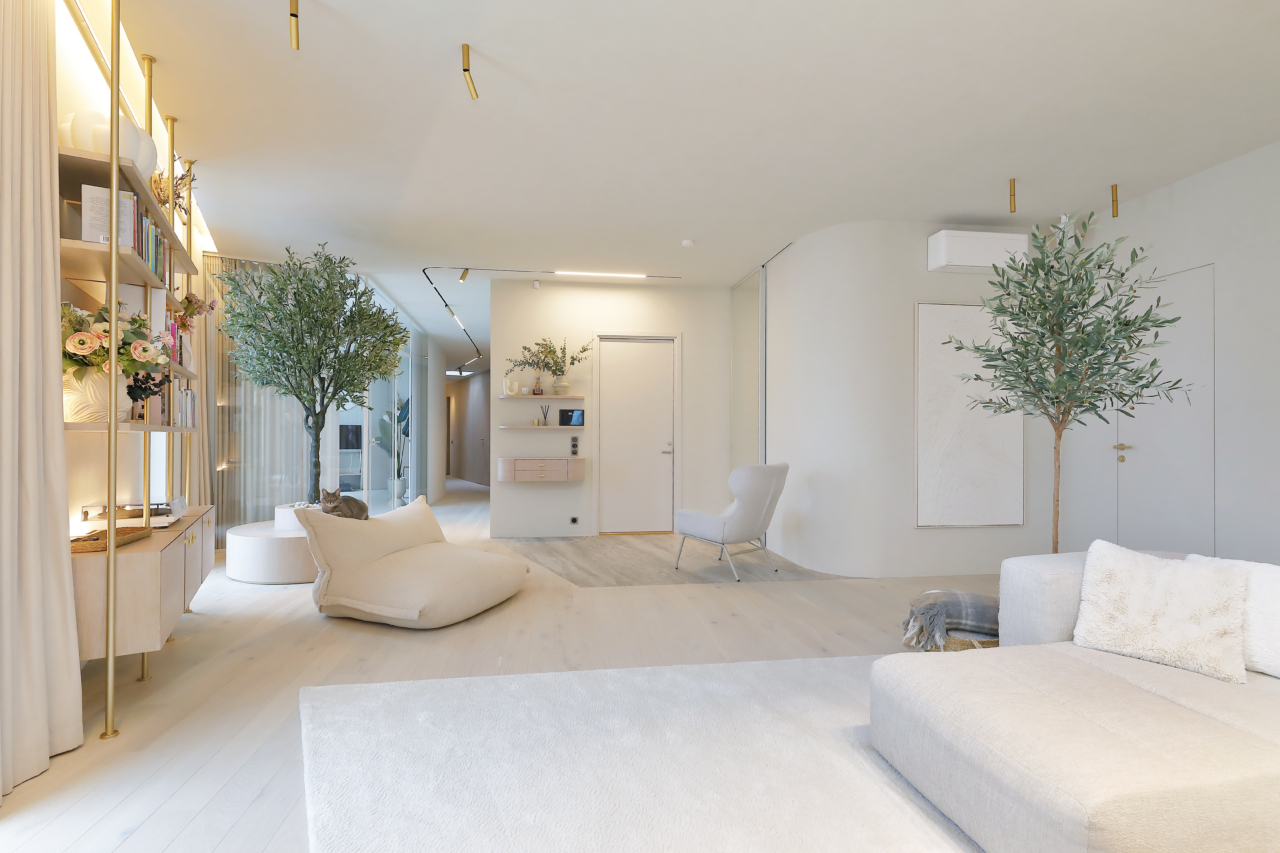
Curved forms and rounded details are used throughout to counterbalance the sharp geometry, creating a softer, more fluid spatial experience. This is further supported by a calm, pastel colour palette and a carefully considered material language, where decorative finishes, wood, and concealed lighting solutions form a layered yet harmonious whole.
Functionality plays an equally important role. Auxiliary spaces, thoughtfully integrated storage, and bespoke furniture support everyday living without compromising the spatial clarity. In the bathrooms and SPA area, large-format surfaces and microcement introduce a contrasting materiality, combining strong visual impact with ease of maintenance.
The result is a home in which architecture supports a way of living defined by calm, presence, and continuity.
Microcement Topcret C Rustic: Eesti Mikrotsement
Decorative paint by Novacolor: Lacore
Lighting control and lighting solutions: Led House
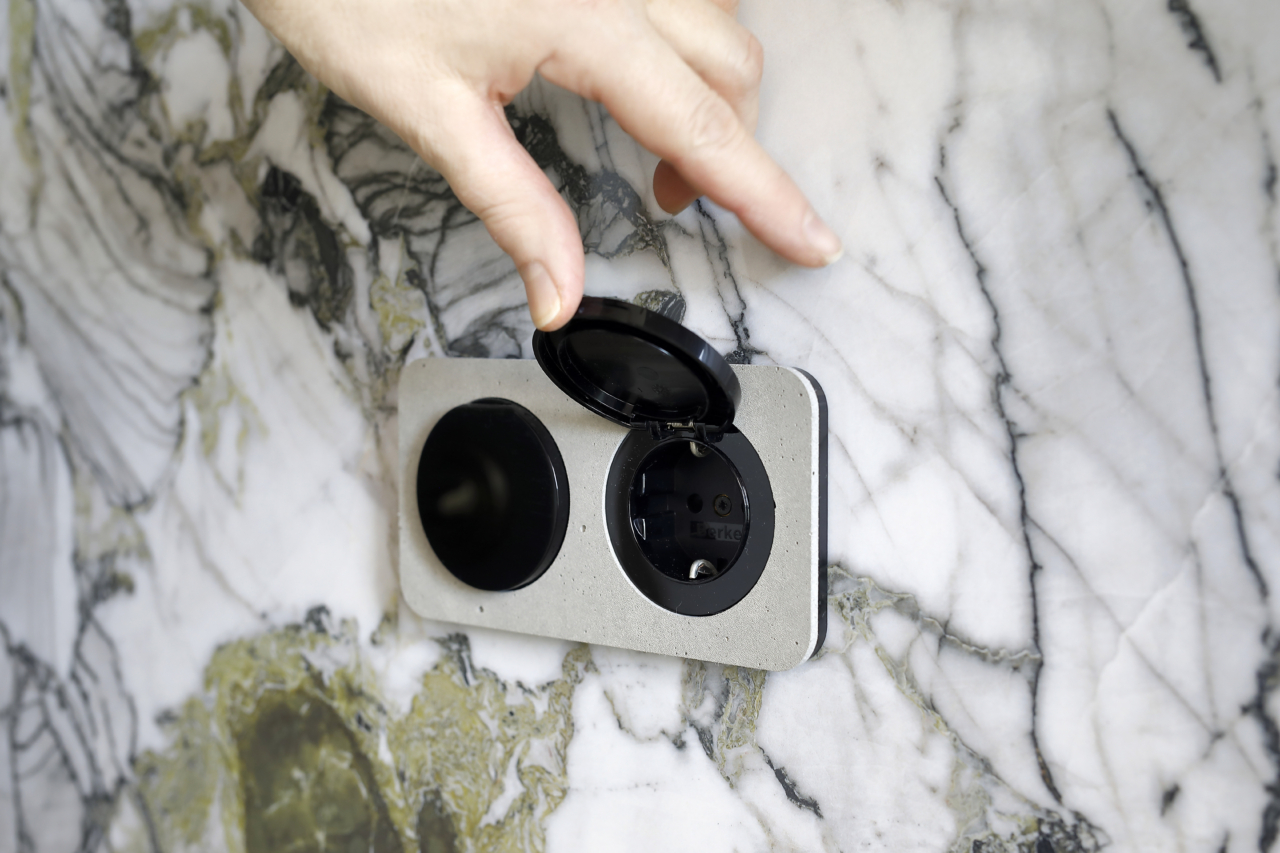
Berker switches and sockets: Silman
Decorative lighting by Flos: Hektor Light
Furniture: Studio Living
Custom-made furniture: Glano AT
Furniture lighting: Led House
Wood veneer: Mass
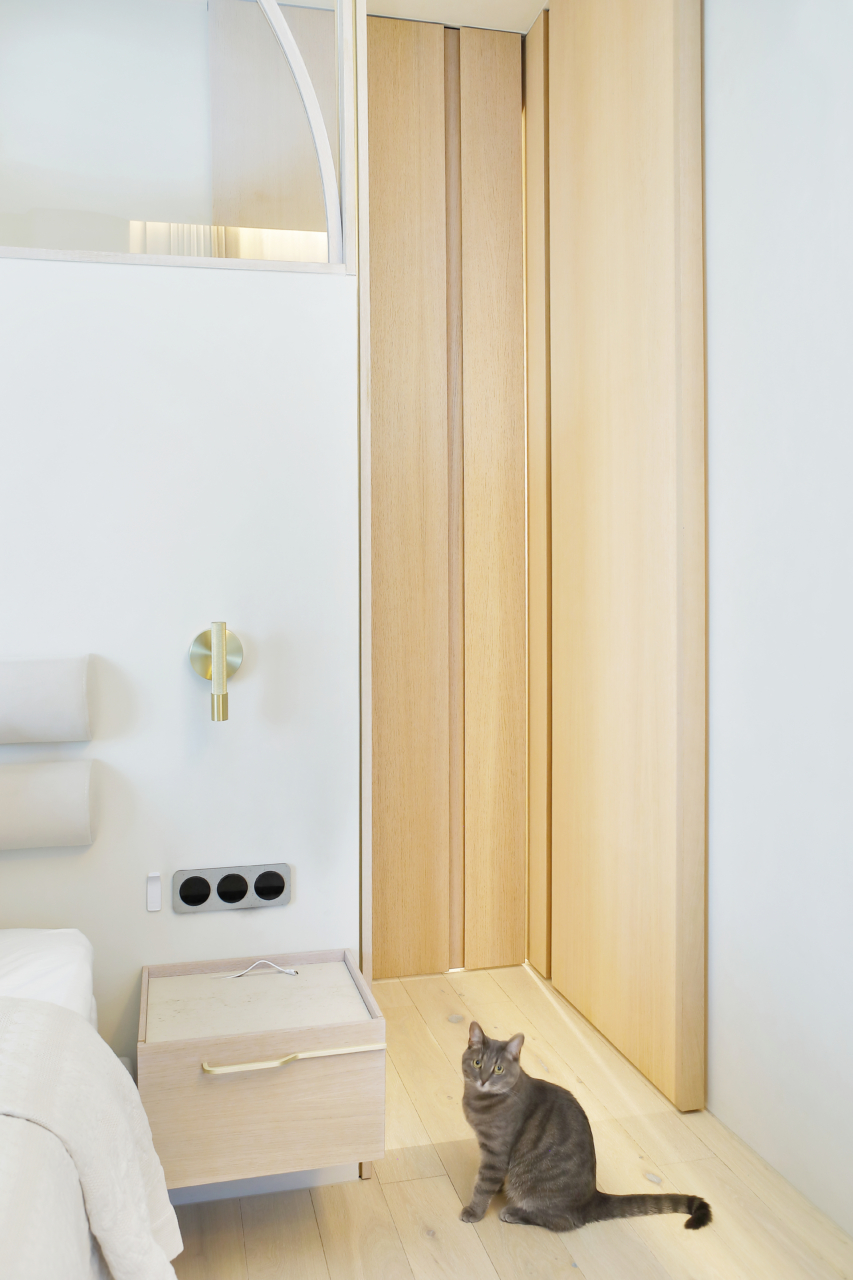
Concealed door frames: Pro Space
Stone bathtub: Balteco
Ceramic tiles: Noto
Bathroom sinks: Noto
Flush plates: Noto
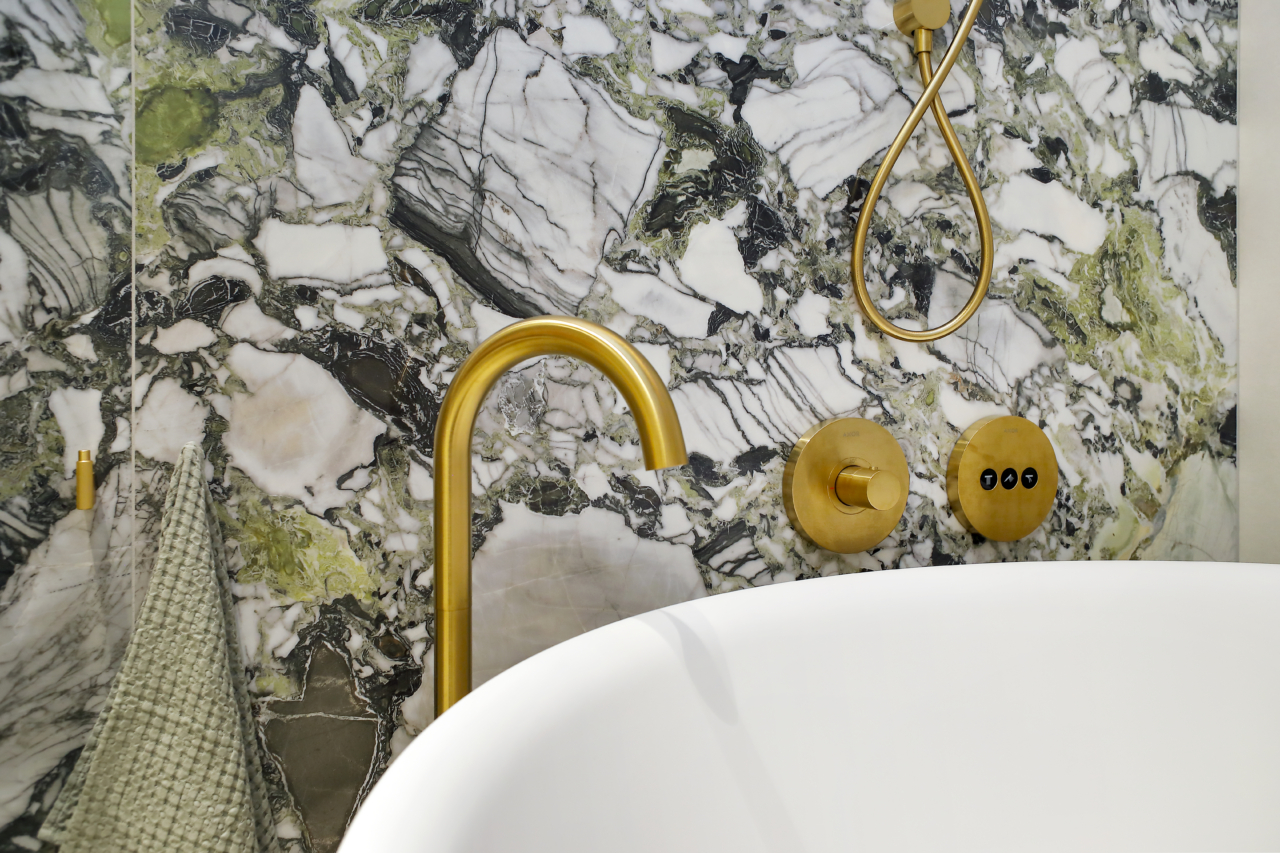
Faucets and accessories: Axor
Audio systems and home electronics: Euronics
Custom-made bed and ottomans: Sofaservice
Cabinet fronts in Abet Polar: Lore
Kitchen faucet and soap dispenser: Grohe
Sandra Goroško: I feel that this is a very personal project for me—one that truly reflects my core values as an interior architect. These values are rooted in strong collaboration with the client and, above all, trust. In this project, everything began with the client conveying a feeling—an intention for the kind of atmosphere they wanted to experience in their home. My role as an interior architect was to translate that into space through materials and design solutions.
There was no overly specific brief, which I believe is actually the right approach. It allowed me to form a genuine connection with the project and work toward the best possible result. The desired lifestyle and sense of home were communicated very clearly.
From the outset, we defined that this home should primarily offer relaxation—a calm and restorative environment where one can unwind after a long day. There is even a slightly hedonistic dimension to the concept, with carefully planned quiet zones, including a spa area with both a steam sauna and a traditional sauna. It is a space where you can truly rest.
The overall concept and colour palette are calm, pastel, and warm, supporting a sense of comfort and well-being. Regardless of the weather outside—even during a storm—the interior remains warm and luminous.
Spatial Constraints and Planning
From a construction perspective, there were several constraints. Originally, the space consisted of two four-room apartments, which required significant reconfiguration to create a single, unified home. The layout itself is quite unusual—almost triangular—with narrower sections and a larger central living area.
This meant that a simple, box-like room arrangement was not possible. Instead, the design required creativity and adaptability. As in most apartment buildings, there were also fixed shafts and structural elements that could not be relocated, requiring careful negotiation within those limitations.
Curved Forms
The interior features a number of curved lines and arched elements. Given the angular nature of the floor plan, these softer forms were introduced to balance the geometry and create a more fluid spatial experience.
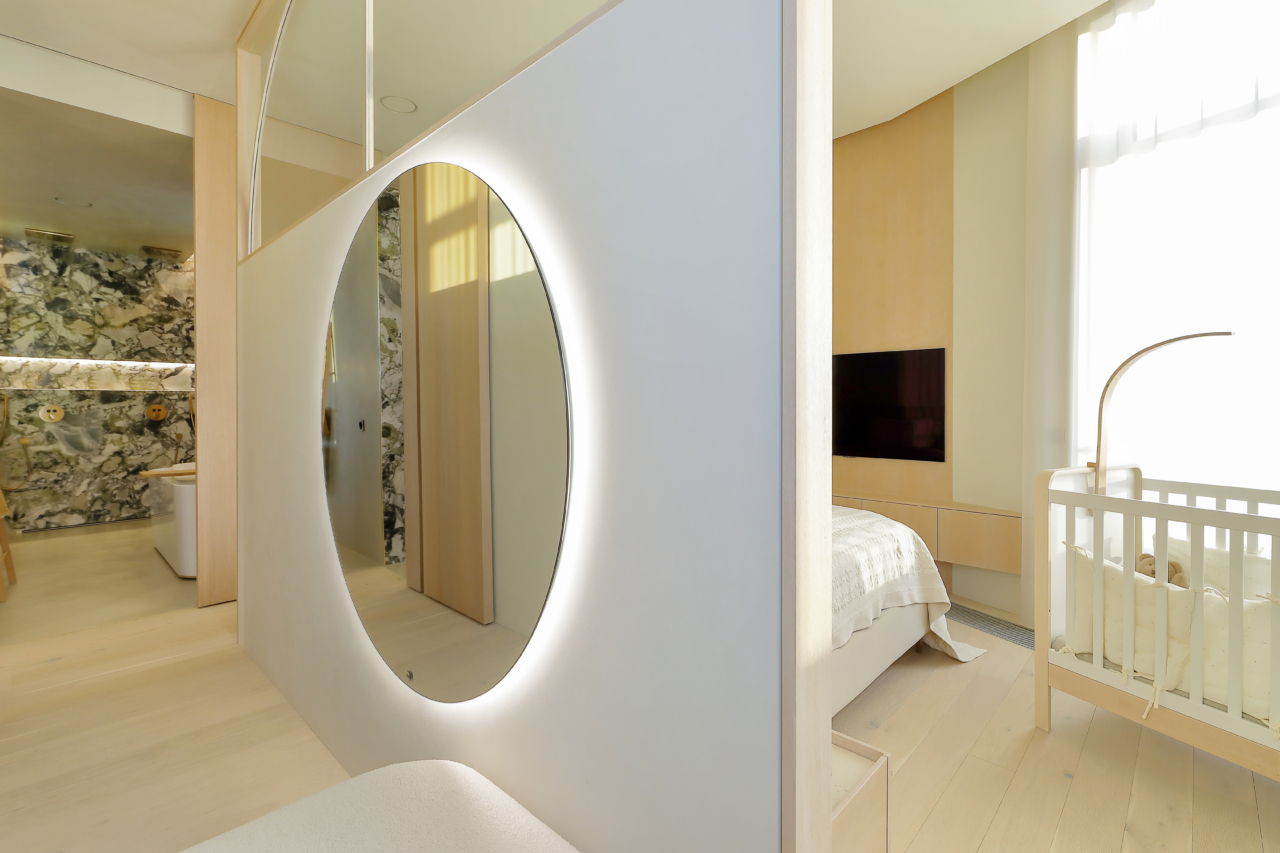
Curved elements appear throughout the apartment—in the entrance wall of the living room, in the kitchen, in custom furniture, in the bedroom partition, and in the bathrooms. For example, in the children’s bathroom, the vanity unit has a rounded form, paired with a circular countertop basin and a mirrored cabinet with a subtle arch.
Zoning
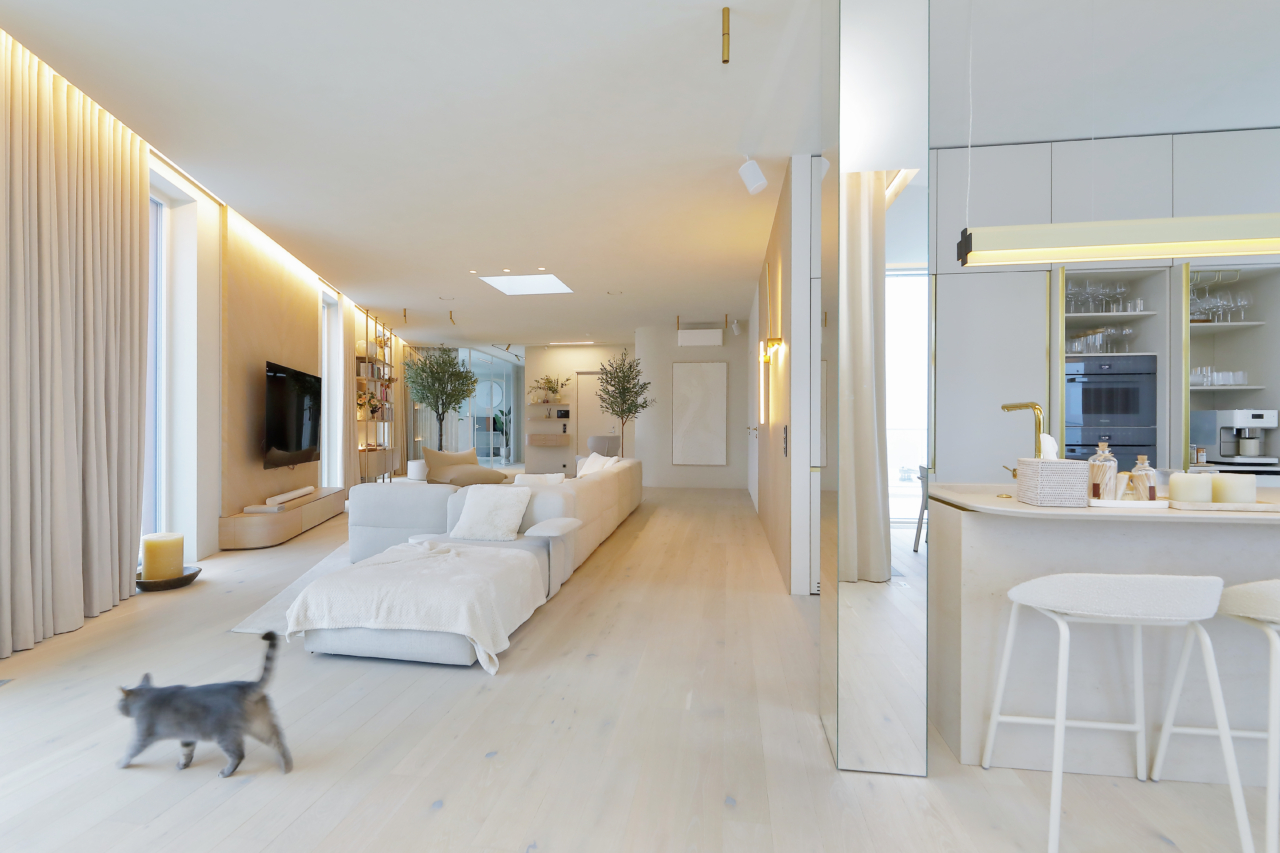
The final layout is clearly divided into two main zones: a quiet, private area with bedrooms and bathrooms, and a more active social zone that includes the living room, kitchen, and spa.
As the homeowners enjoy hosting, the open kitchen and living area support social interaction—cooking, gathering, and spending time together—while the more private wing allows for rest and quiet, even simultaneously.
Utility Spaces
Several auxiliary spaces enhance everyday functionality. These include a pantry and a secondary kitchen, allowing for more efficient cooking and hosting without cluttering the main living area.
There is also a dedicated utility room with a washing machine, dryer, ironing facilities, and storage for cleaning equipment. This space is acoustically insulated, ensuring it does not disturb the calm atmosphere of the home.
Materials and Lighting
The guiding concept of the interior is bright, spacious, warm, and subtly luxurious. Large open areas are balanced through the use of materials and finishes.
Decorative paint plays a central role—both walls and ceilings are finished in the same tone using Novacolor Celestia, which creates a soft, cloud-like effect while remaining highly durable and easy to maintain. It also offers a 10-year UV guarantee, making it suitable for everyday family life.
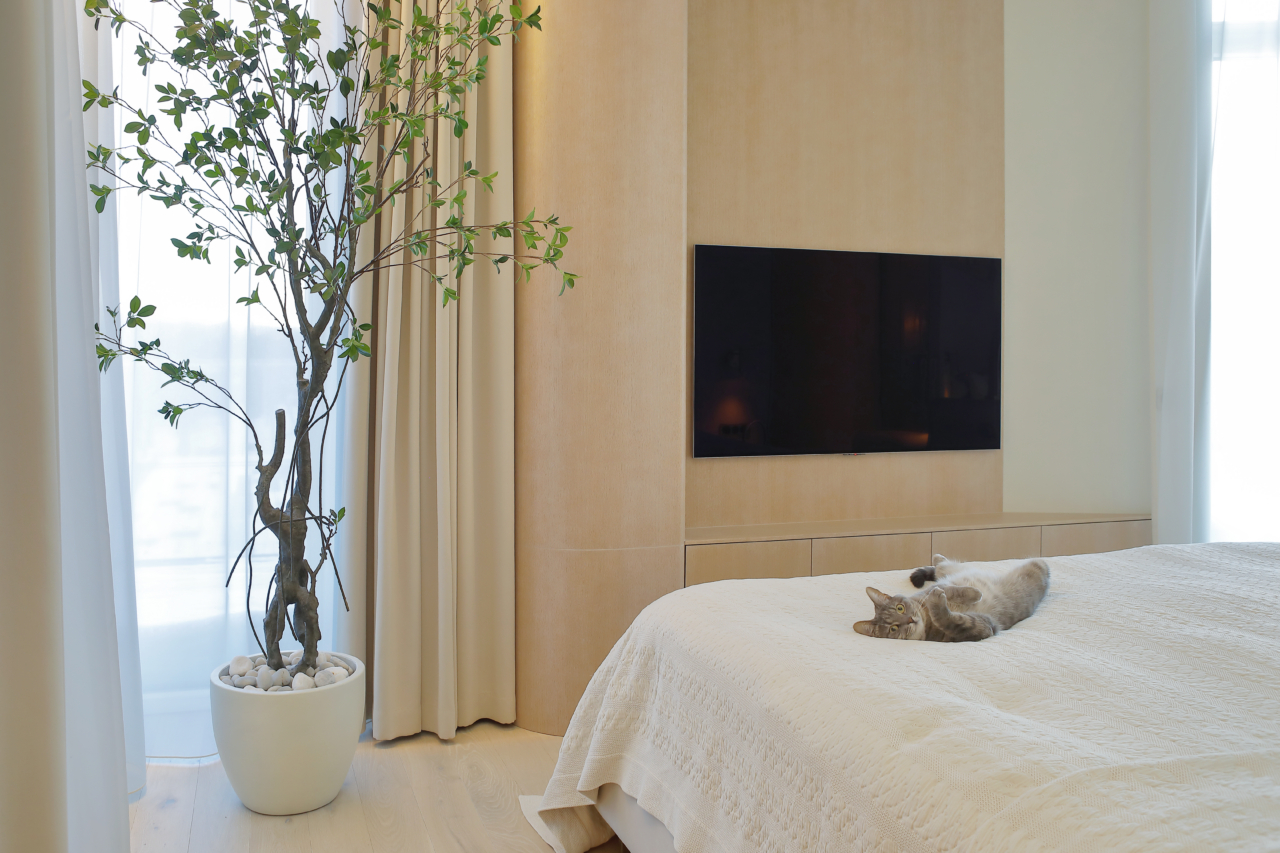
Wood is used extensively, including veneered wall panels in a herringbone pattern, adding texture, warmth, and visual interest to large surfaces.
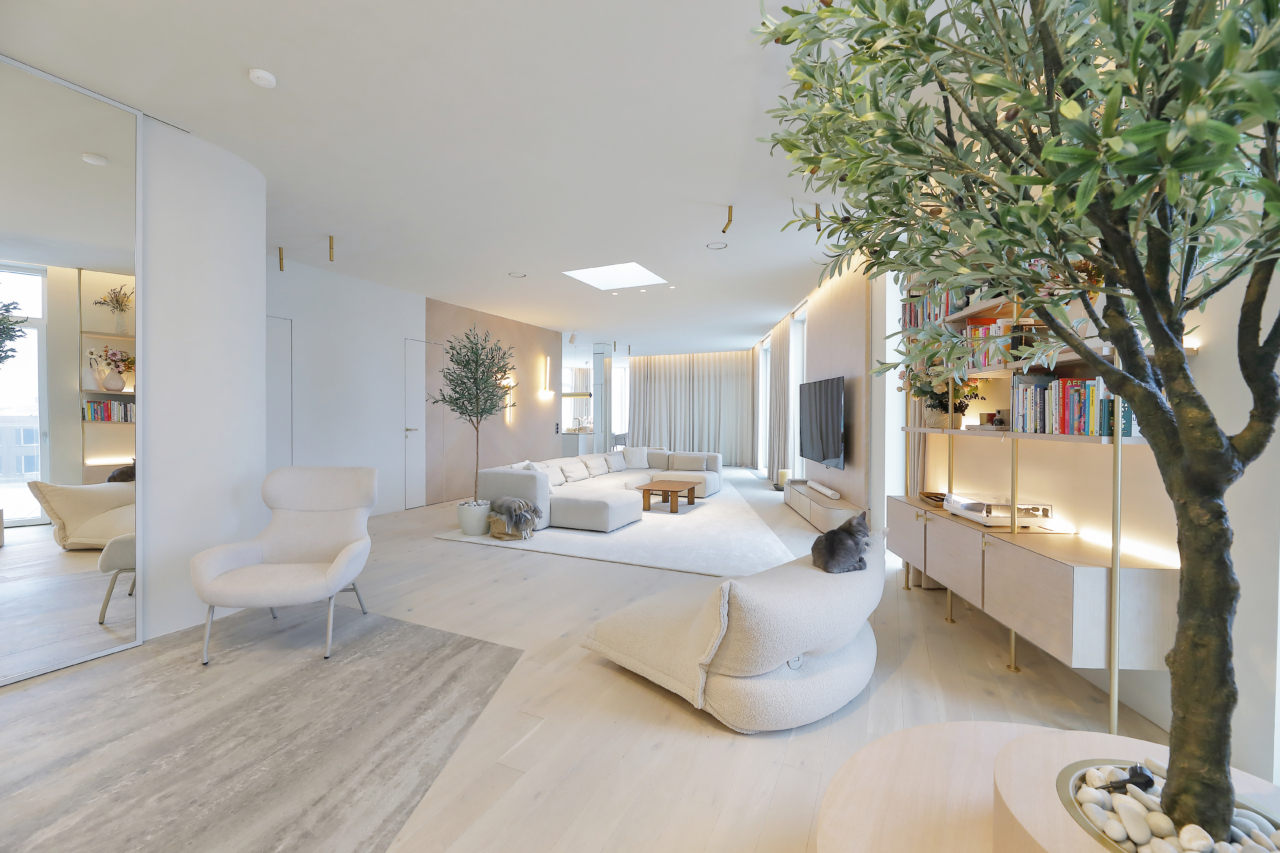
Lighting is a key element and is predominantly concealed. Functional lighting is integrated into cornices and recessed tracks, creating a uniform and calm atmosphere. Visible fixtures are used sparingly as accents. The result is a space where light is felt rather than seen.
Most lighting is dimmable, allowing for different moods—from bright task lighting to soft ambient illumination. Exterior terrace lighting also contributes to the interior atmosphere, blurring the boundary between inside and outside.
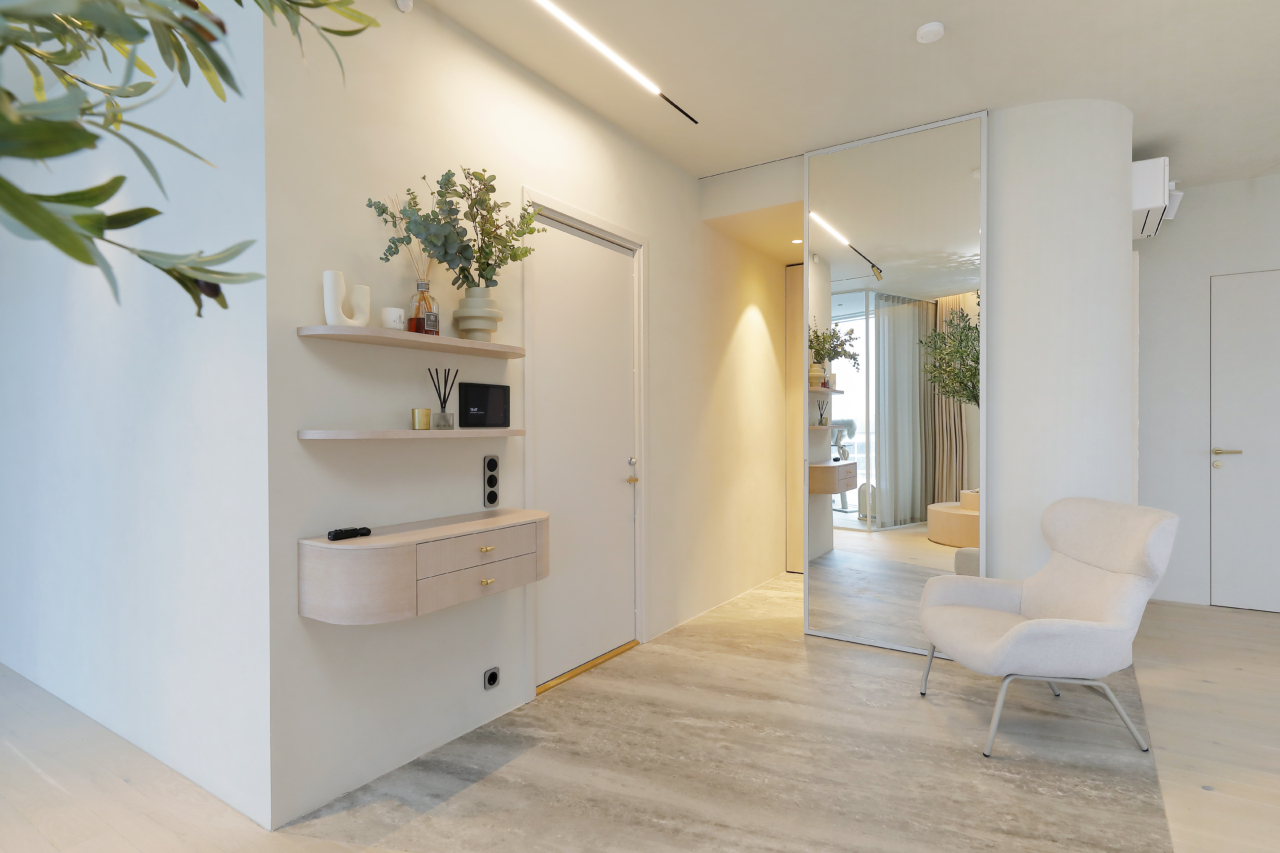
Accent lighting is used to highlight specific elements, such as an olive tree in the living room or details in custom furniture. Brass is used throughout the interior—one of the warmest metals—appearing in fixtures, fittings, and small details.
Sanitary fittings are primarily from AXOR, known for durability and suitability for Nordic conditions, while flush plates by OLI have received design recognition from Archiproducts.
An integrated sound system extends throughout the apartment, including bathrooms, ensuring a continuous auditory experience.
Custom Furniture
Custom-made furniture plays a significant role in the project. Most pieces were designed specifically for this space, allowing precise proportions and material coherence throughout.
Light-toned veneers and brass details are used consistently. Practical solutions are also integrated—for example, a media unit with acoustic fabric allows remote signals to pass through while keeping technology hidden.
Custom furniture ensures that each element fits perfectly within the architecture, balancing minimalism with functionality.
Bathrooms and Spa
Bathrooms introduce a subtle contrast to the otherwise soft palette. Large-format marble-effect slabs with green undertones are paired with microcement, which provides a seamless, calm surface.
The spa area is finished almost entirely in microcement—walls, ceilings, and floors—creating a continuous, easy-to-maintain environment without visible joints.
A guest bathroom, accessed discreetly through a concealed door system, features darker tones and textured tiles by Living Ceramics, enhanced by mirror lighting.
Master Bedroom
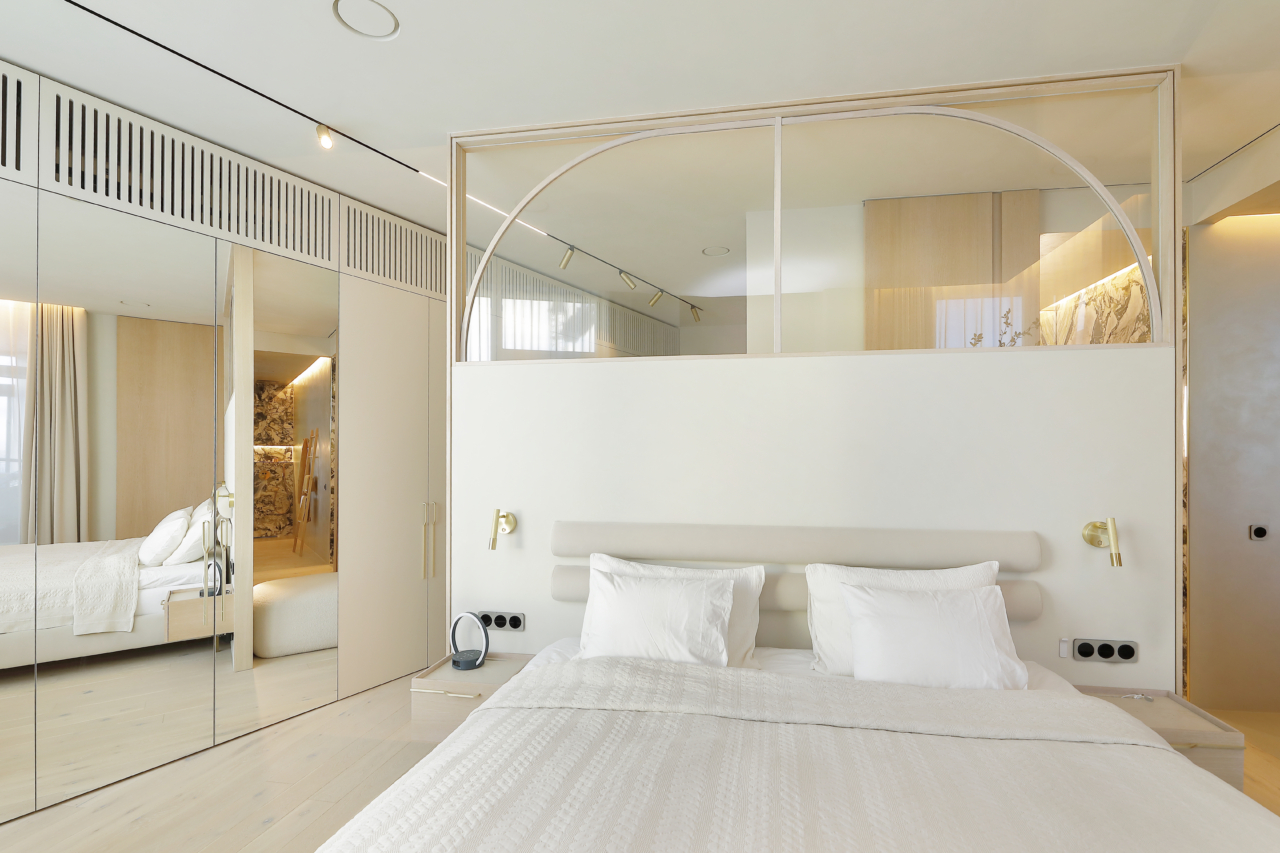
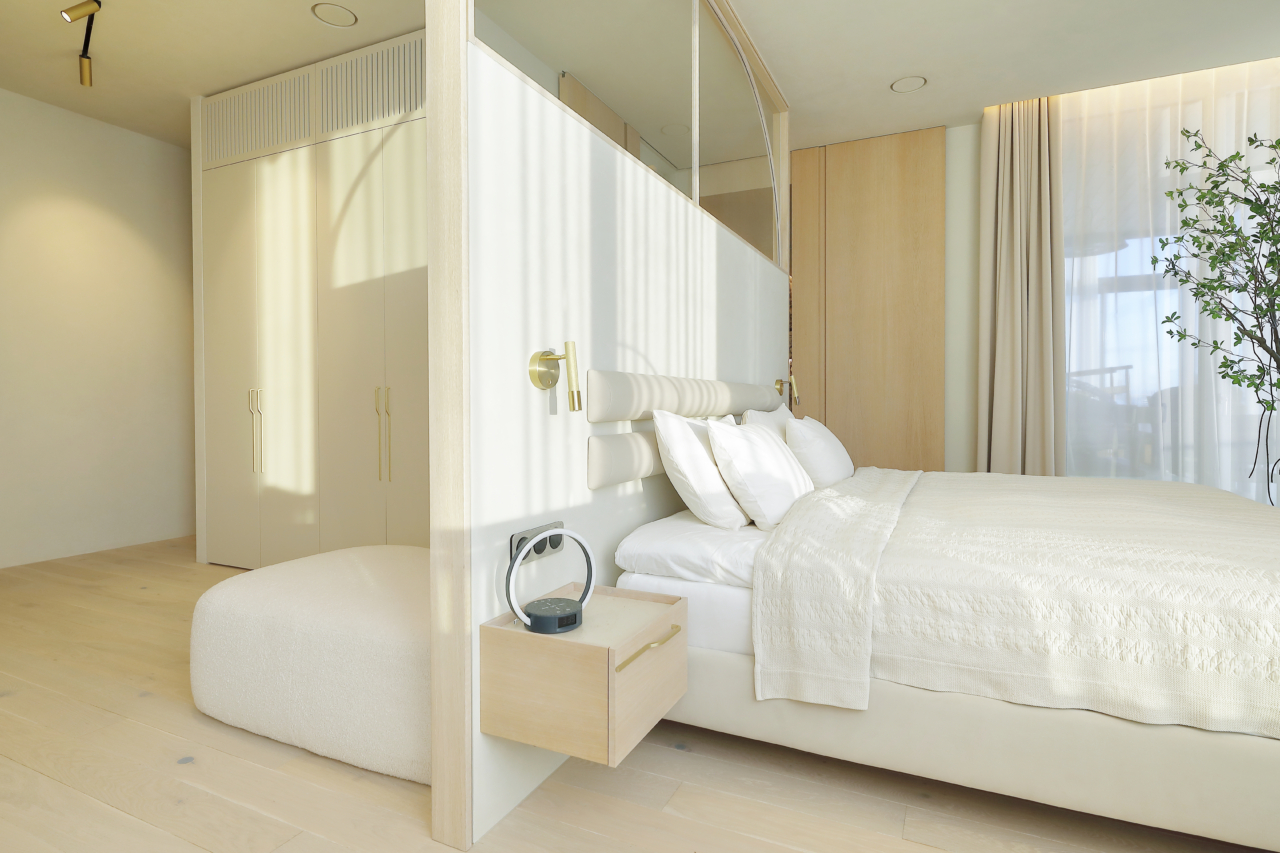
The master suite is organised into distinct zones: a generous wardrobe area, a sleeping space, and a bathroom divided into dry and wet areas.
A partially transparent partition separates the bed from the wardrobe, maintaining privacy while allowing natural light to flow through. The bedroom also opens onto a private loggia, occasionally used as an outdoor sleeping area.
Entrance and Circulation
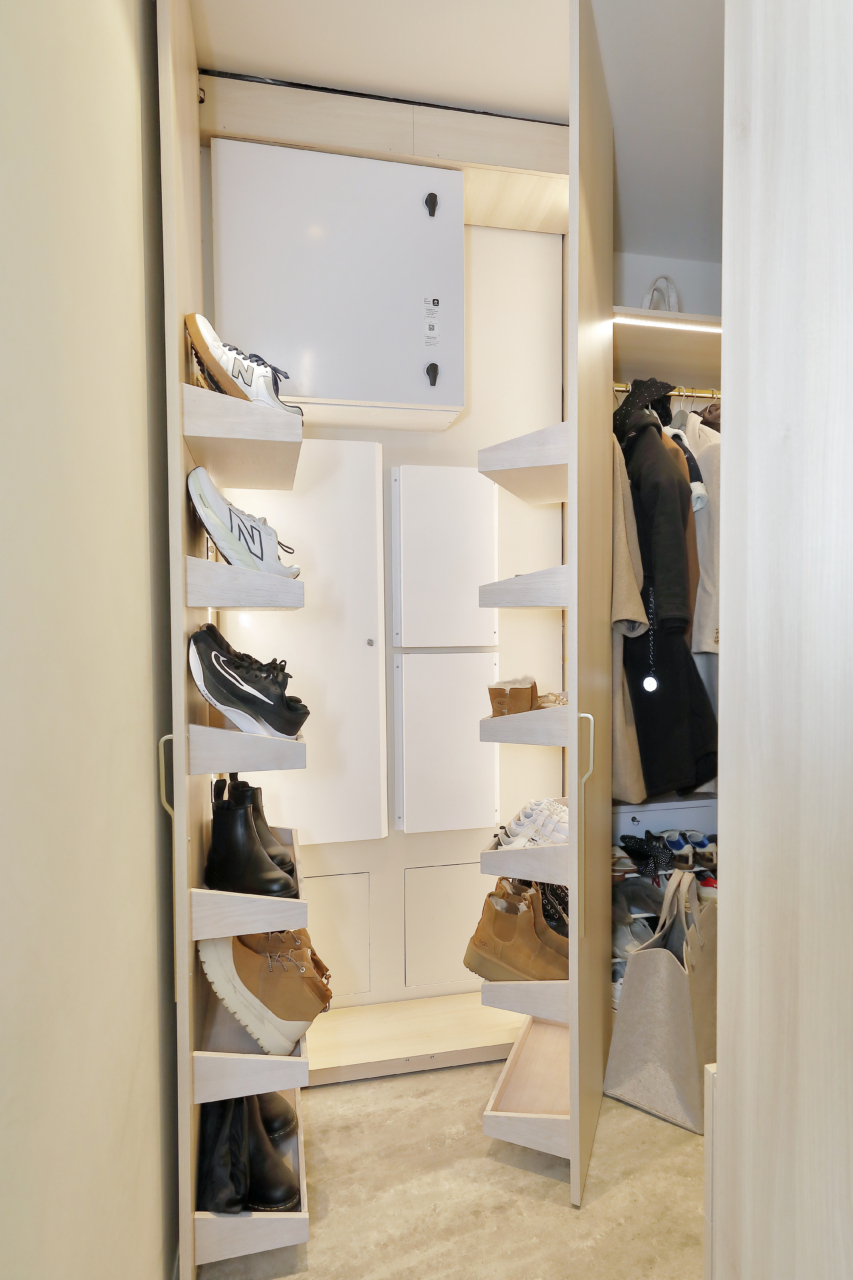
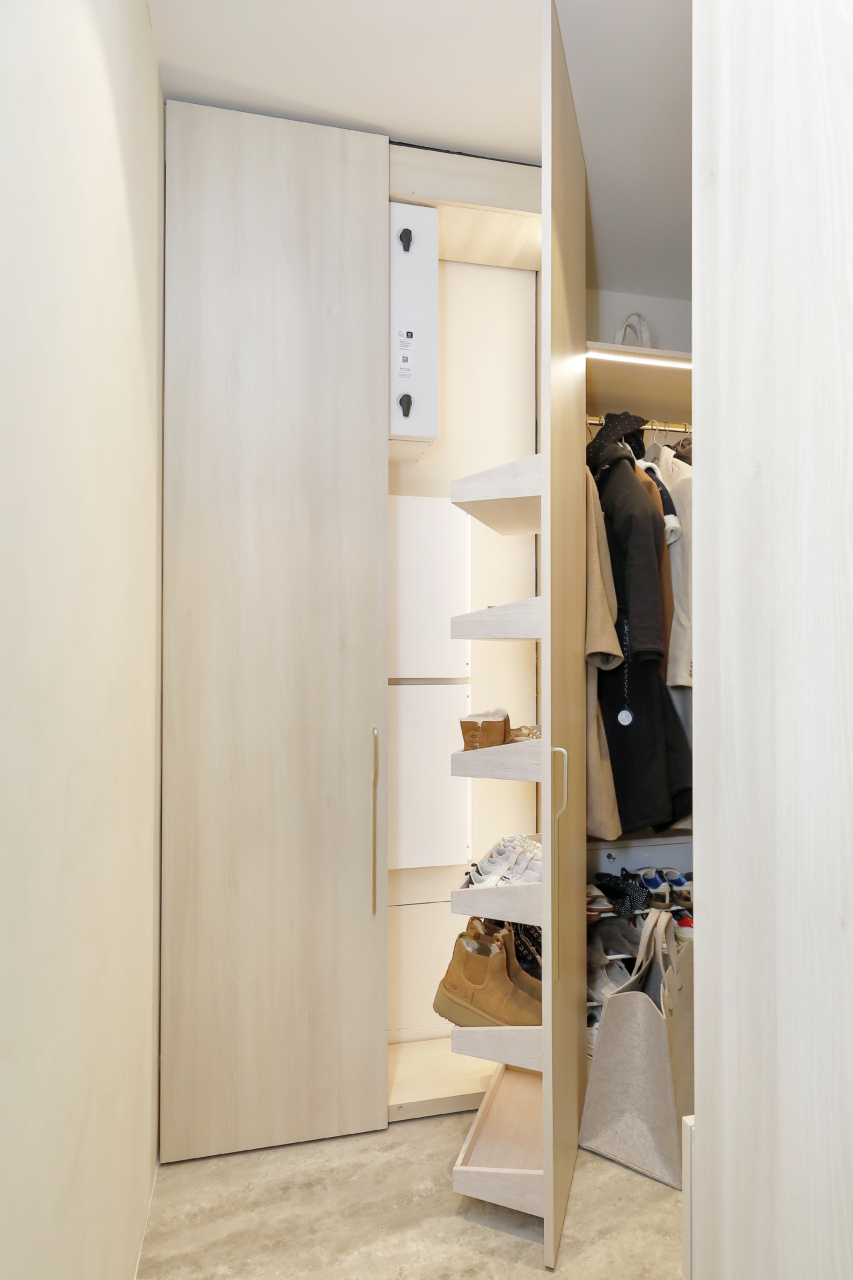
Upon entering, the apartment creates an immediate sense of openness and light. The entrance is not enclosed but transitions into the living space, with a semi-hidden wardrobe area to the side.
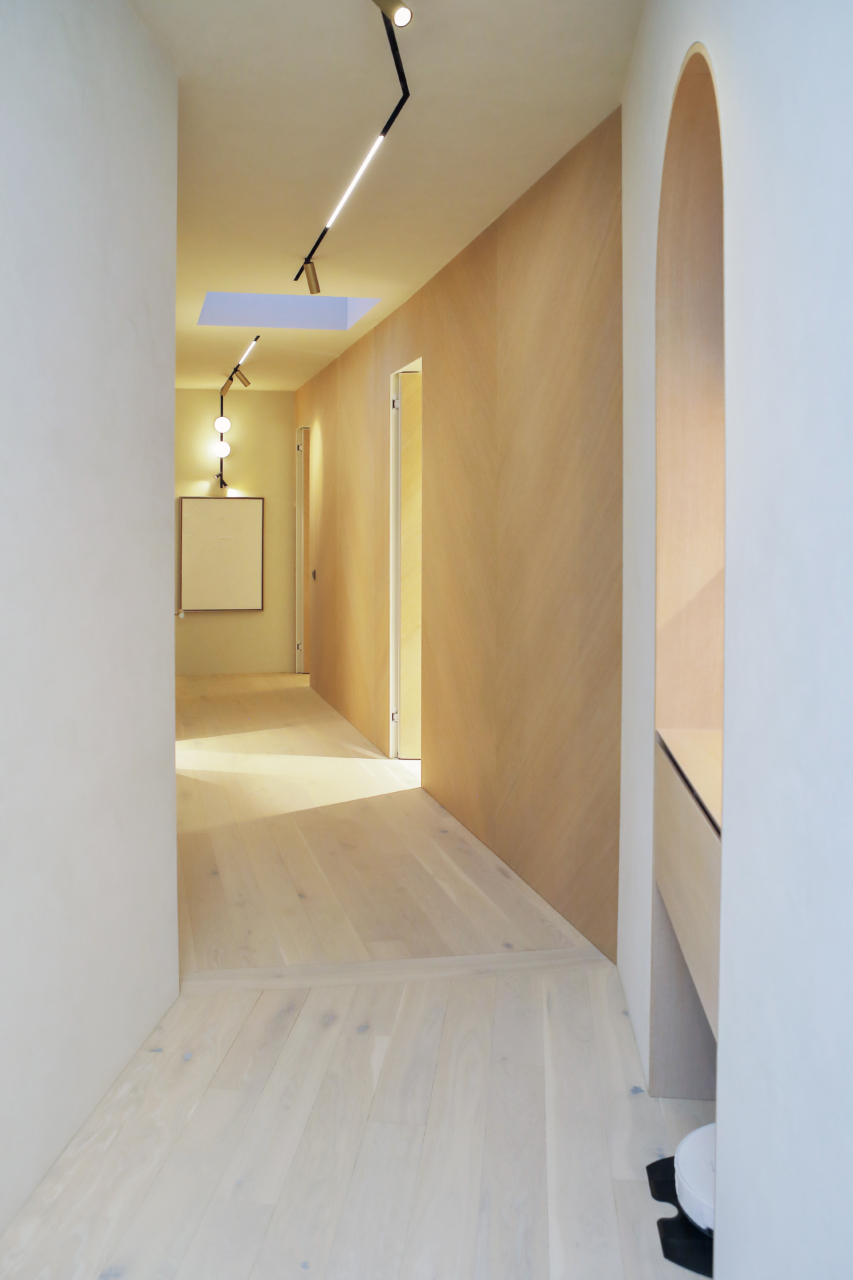
A long corridor connects the living and private areas. To avoid monotony, natural light is introduced through glass partitions and a skylight, while varied textures add visual interest.
Closing Thoughts
The apartment has now been in use for several years, confirming the durability and practicality of the chosen materials. Despite the light colour palette, surfaces remain clean and well-maintained.
One important takeaway is the value of considering all aspects of daily life early in the design process—including future plans such as pets, which can influence material choices.
Ultimately, the project demonstrates how thoughtful design can create a home that is not only visually refined but also deeply aligned with the rhythms and needs of everyday life.
Penthouse in Noblessner: A Calm and Luxurious Home as a Holistic Spatial Experience
Postitatud: 03.04.2026
Galerii