Autumn Garden Tasks in Harmony with Nature. Garden Designer Merilen Mentaal
Does autumn garden maintenance really mean cutting back every plant and raking up every last leaf? An experienced garden designer recommends a less intensive approach and greater trust in nature. Sometimes, leaving a garden task undone at the right moment can benefit plants more than a thorough autumn clean-up.
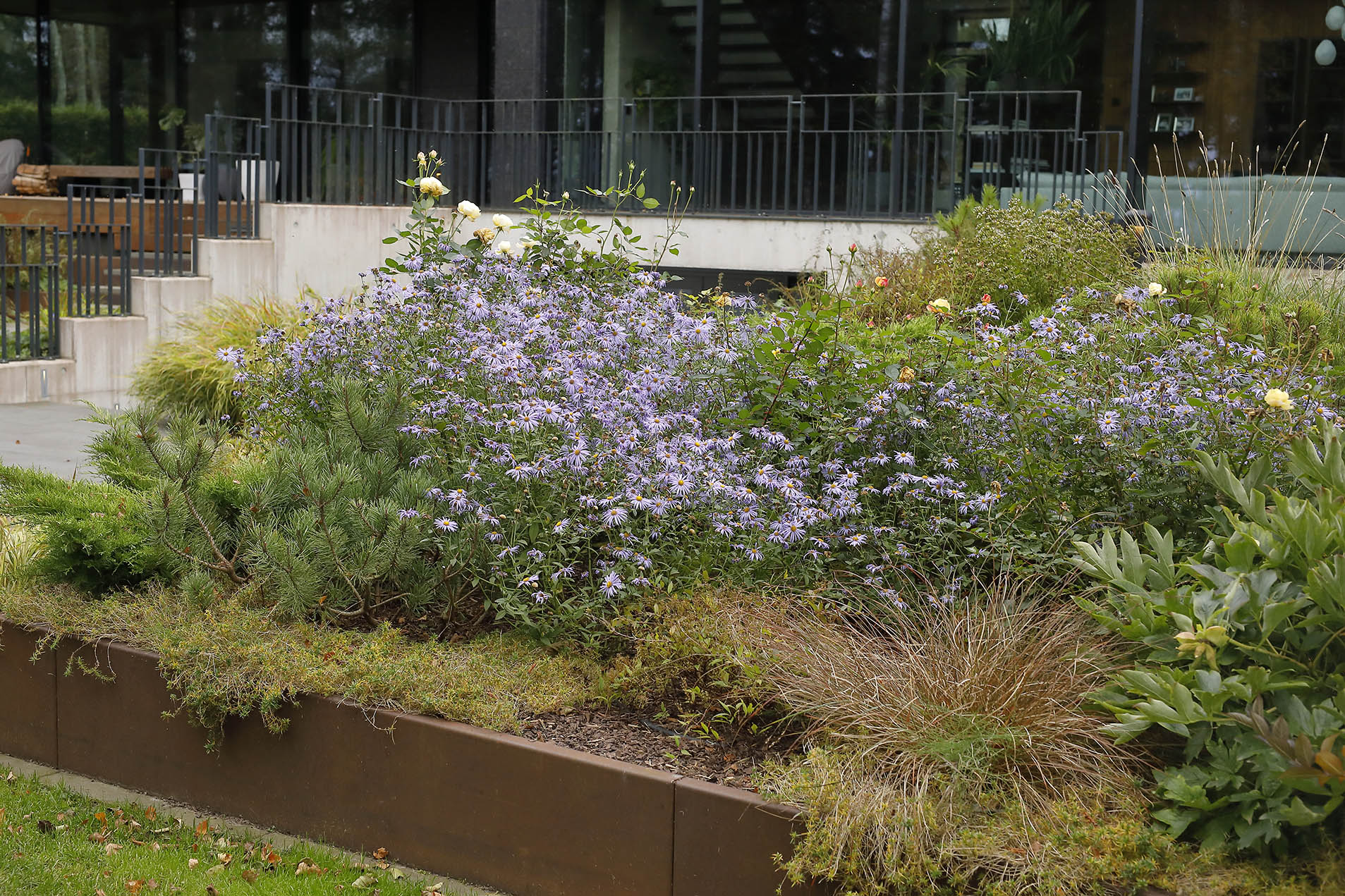
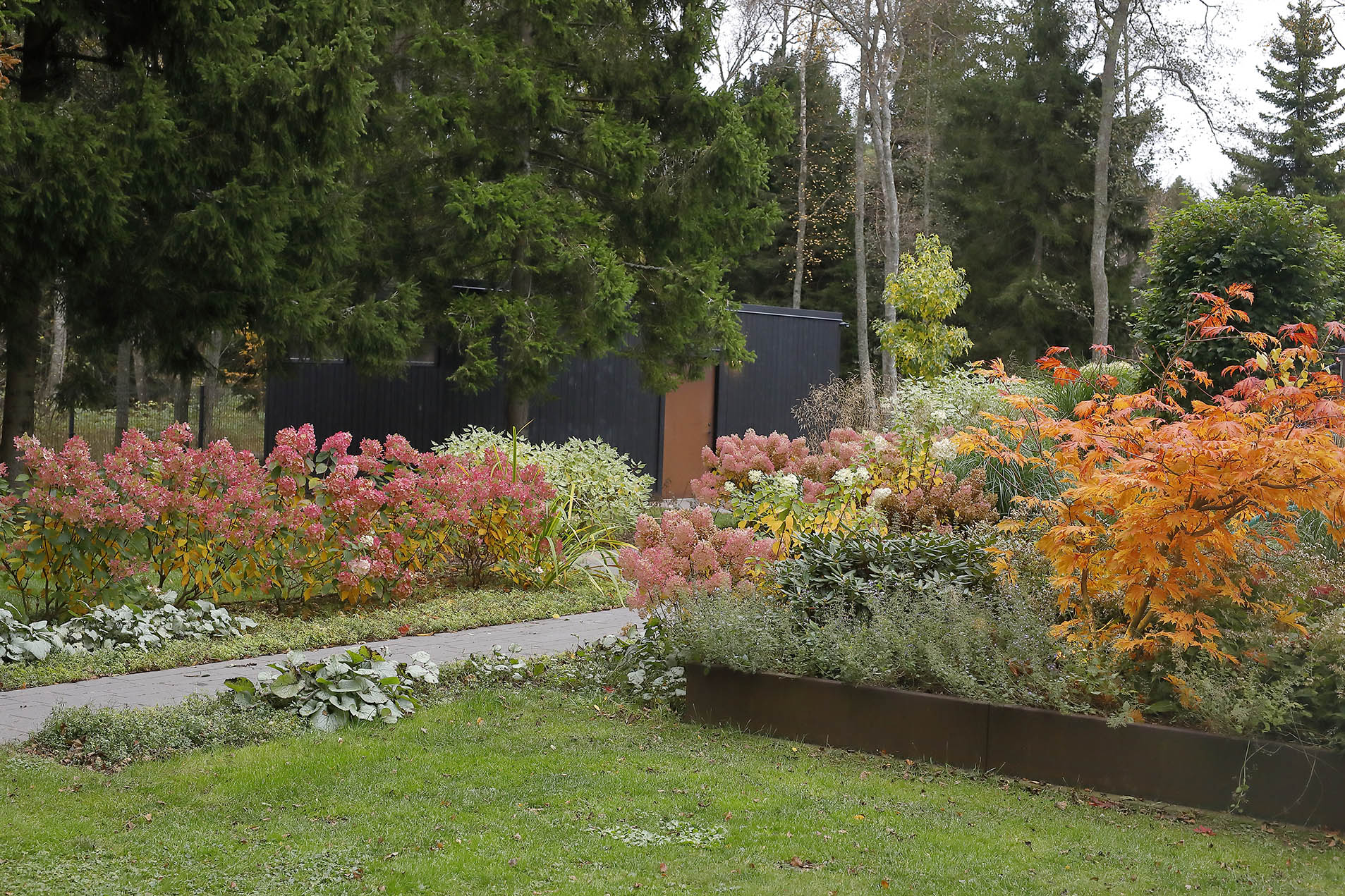
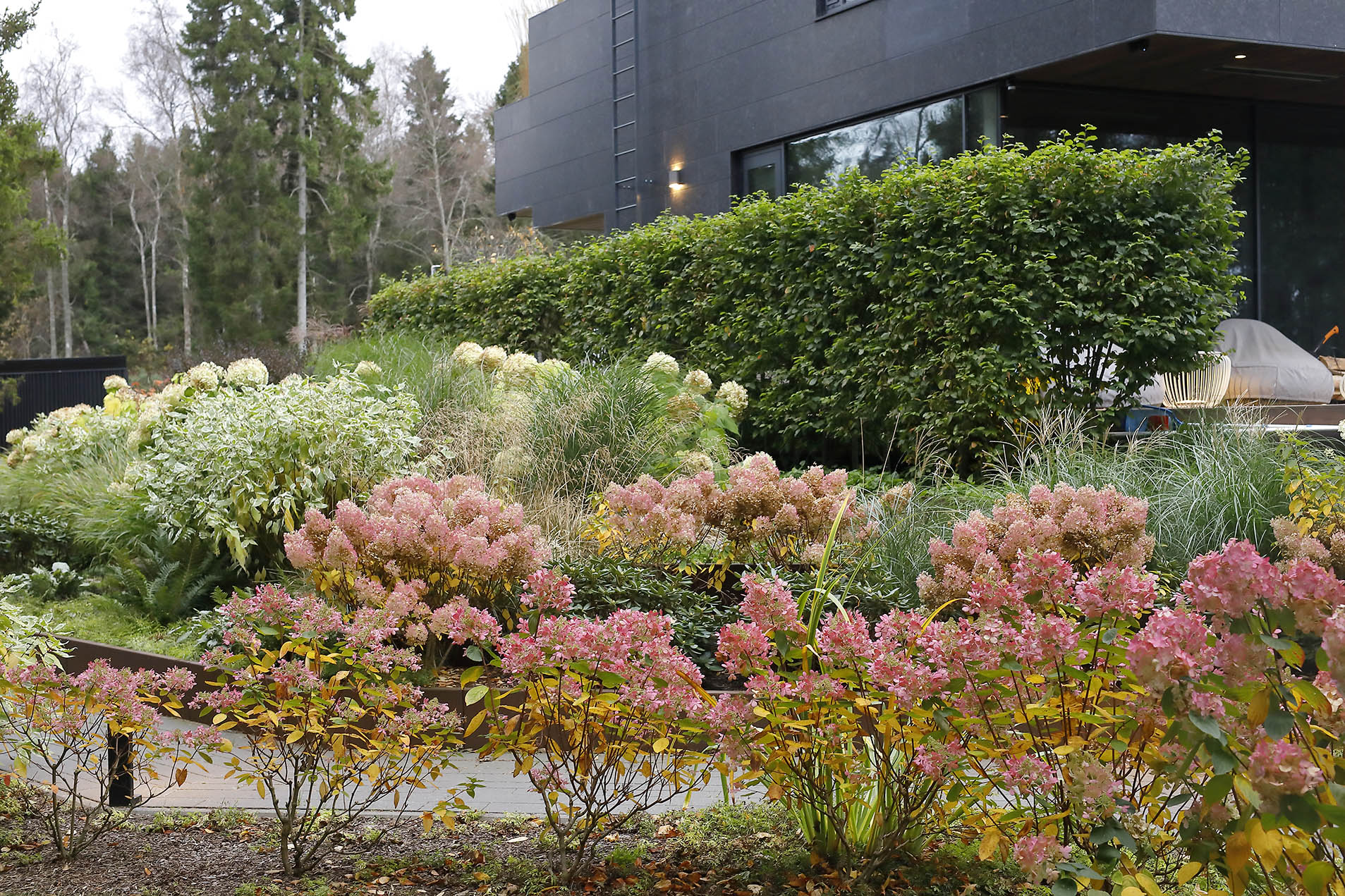
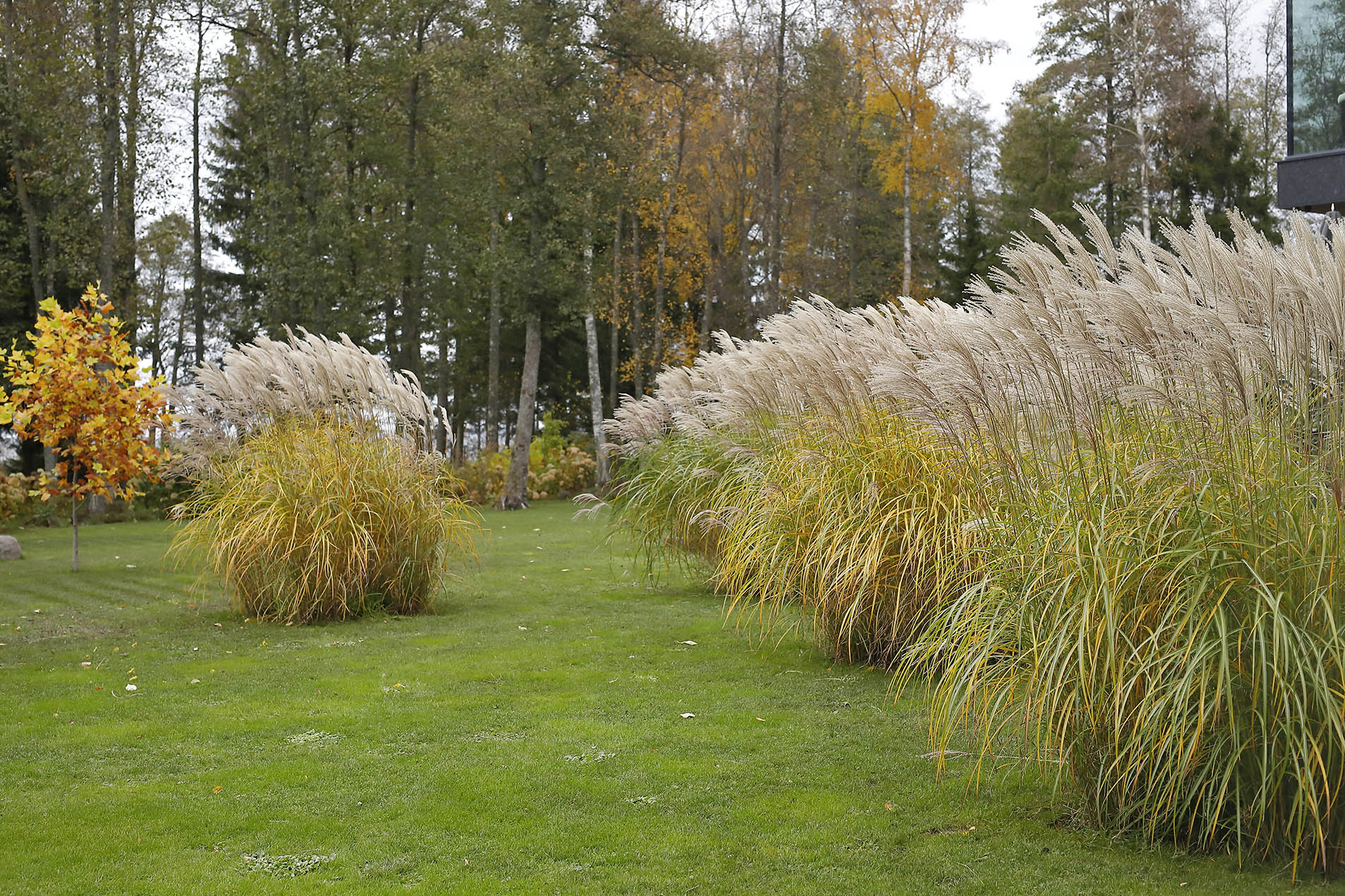
Increasingly long and mild autumns have extended the gardening season. The first overnight frost does not mean that gardening must come to an end, and many plants can remain untouched until spring. Ornamental grasses, dried perennial stems and hydrangea flowerheads add form and structure to the winter garden, protect more frost-sensitive plants and provide shelter for beneficial insects.
Why should roses not be pruned in autumn? When is the right time to mound soil around their bases for winter protection? The garden designer explains which plants need autumn care and which are best left undisturbed.
The programme also explores why tulip bulbs should not be planted too early, when to apply autumn fertiliser and how to prepare the garden for the next flowering season.
Other topics include the final lawn mowing of the season, leaf raking and composting. Should every fallen leaf be removed from lawns and planting beds? How can autumn leaves be turned into valuable compost, and when might plant debris spread disease?
There is no need to strip the garden bare in autumn. On the contrary, leaving selected plants, ornamental grasses and fallen leaves in place helps preserve biodiversity, protect the soil and maintain the garden’s beauty throughout winter.
We share practical advice on which autumn gardening tasks are truly necessary, which can wait and how to prepare the garden for winter in harmony with nature’s rhythms.
Plants and flower bulbs: Juhani Puukool (Juhani Puukool on Kodusaade)Autumn fertilisers for lawns and for planting beds and bulb planting: Kekkilä (Kekkilä on Kodusaade)
Fiskars tools: www.loodusinvest.ee (Loodus Invest on Kodusaade)
STIGA robotic lawn mower and battery-powered ride-on mower
Compost accelerators and winter bird food: Baltic Agro
Timestamps:
1:05 Merilen Mentaal, Garden Designer
1:20 Which perennials should be cut back in autumn?
1:50 Preparing ornamental grasses for winter
2:15 Hostas in autumn
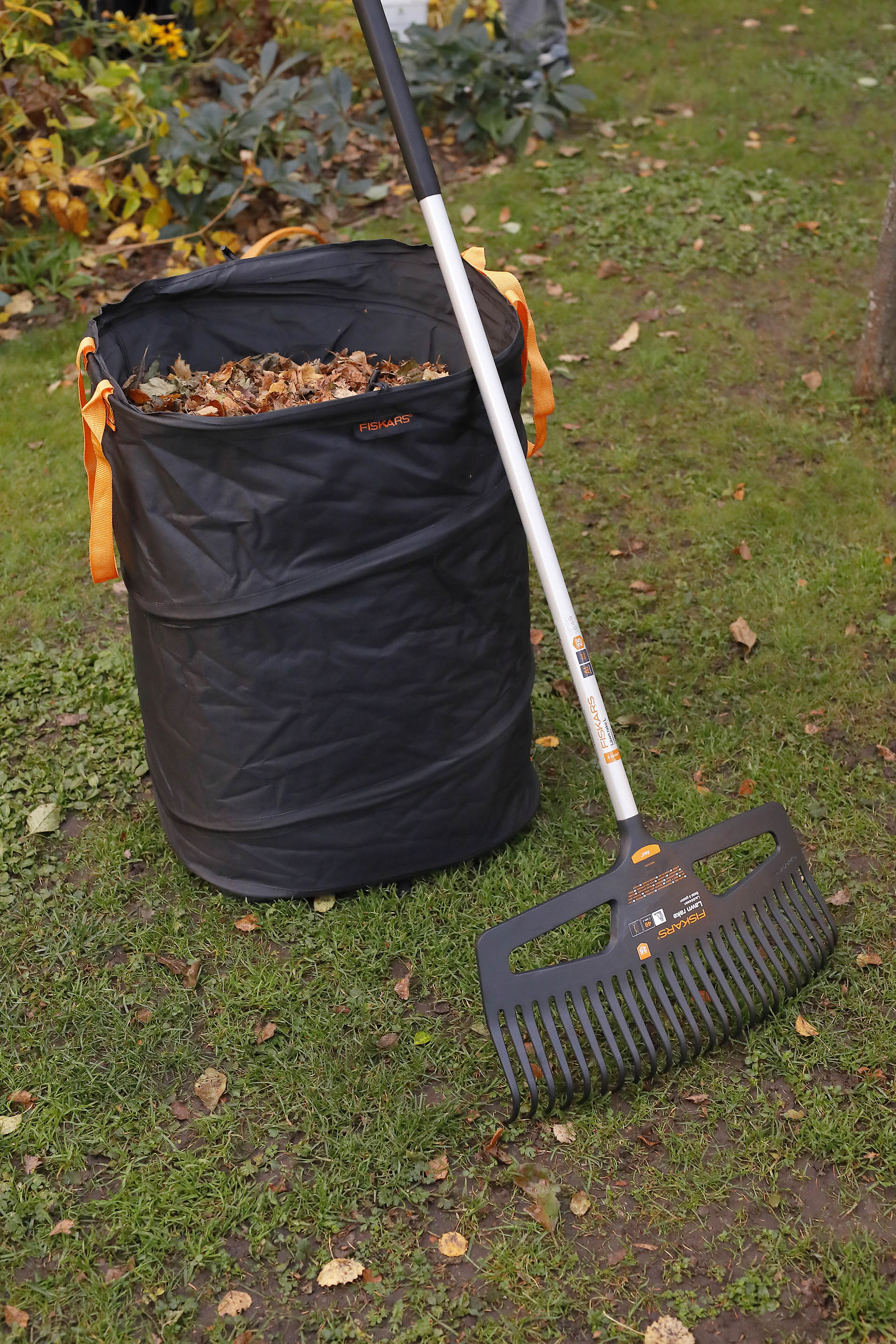
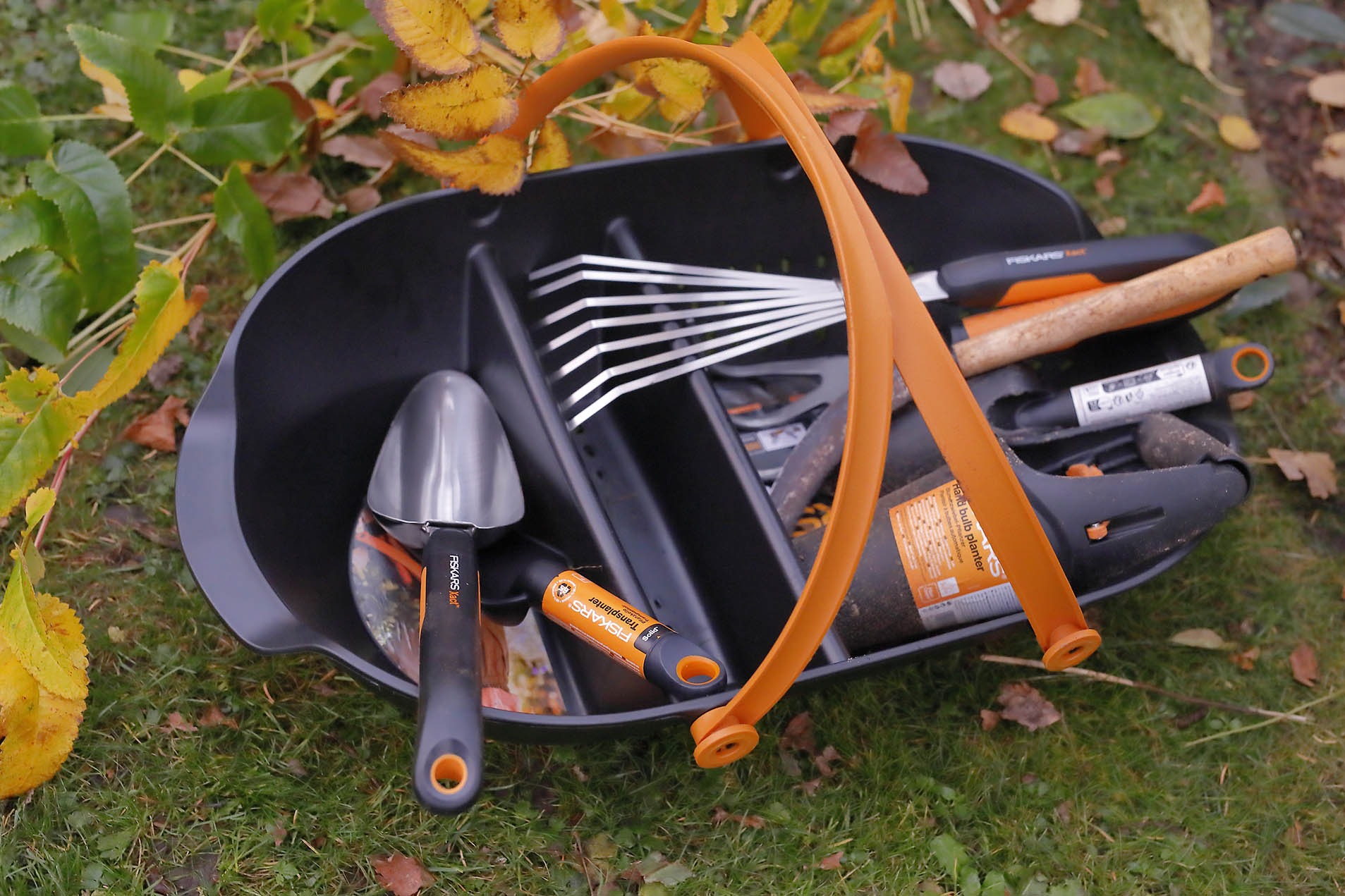
2:45 Fiskars Ergo POP-UP Garden Bag, loodusinvest.ee (Loodus Invest on Kodusaade)
3:26 Autumn rose care and mounding soil around roses for winter protection
3:48 Kekkilä Autumn Fertiliser PLUS+, kekkila.ee (Kekkilä on Kodusaade)
4:22 Kekkilä soils, including peat-free soil
5:56 Hydrangeas, juhanipuukool.ee (Juhani Puukool on Kodusaade)
6:00 Hydrangeas and which perennials should be left unpruned over winter?
6:35 What to do with fallen leaves in autumn?
6:38 Fiskars X-Series Lawn and Leaf Rake, loodusinvest.ee
7:36 Kekkilä Autumn Fertiliser PLUS+, kekkila.ee
7:53 Kekkilä Lawn Fertiliser PLUS+, kekkila.ee
8:02 Fiskars Plus Garden Basket, loodusinvest.ee
8:02 Planting flower bulbs in autumn
8:28 Fiskars Solid Bulb Planter, loodusinvest.ee
8:59 Fiskars Solid Garden Trowel, loodusinvest.ee
9:10 Kekkilä Autumn Fertiliser PLUS+, kekkila.ee
9:25 How to manage autumn gardening tasks when time is limited
9:54 Fiskars Plus Garden Basket, loodusinvest.ee
10:01 STIGA lawn mowers
10:06 Collecting autumn leaves with a lawn mower, ride-on mower or garden rider, and composting
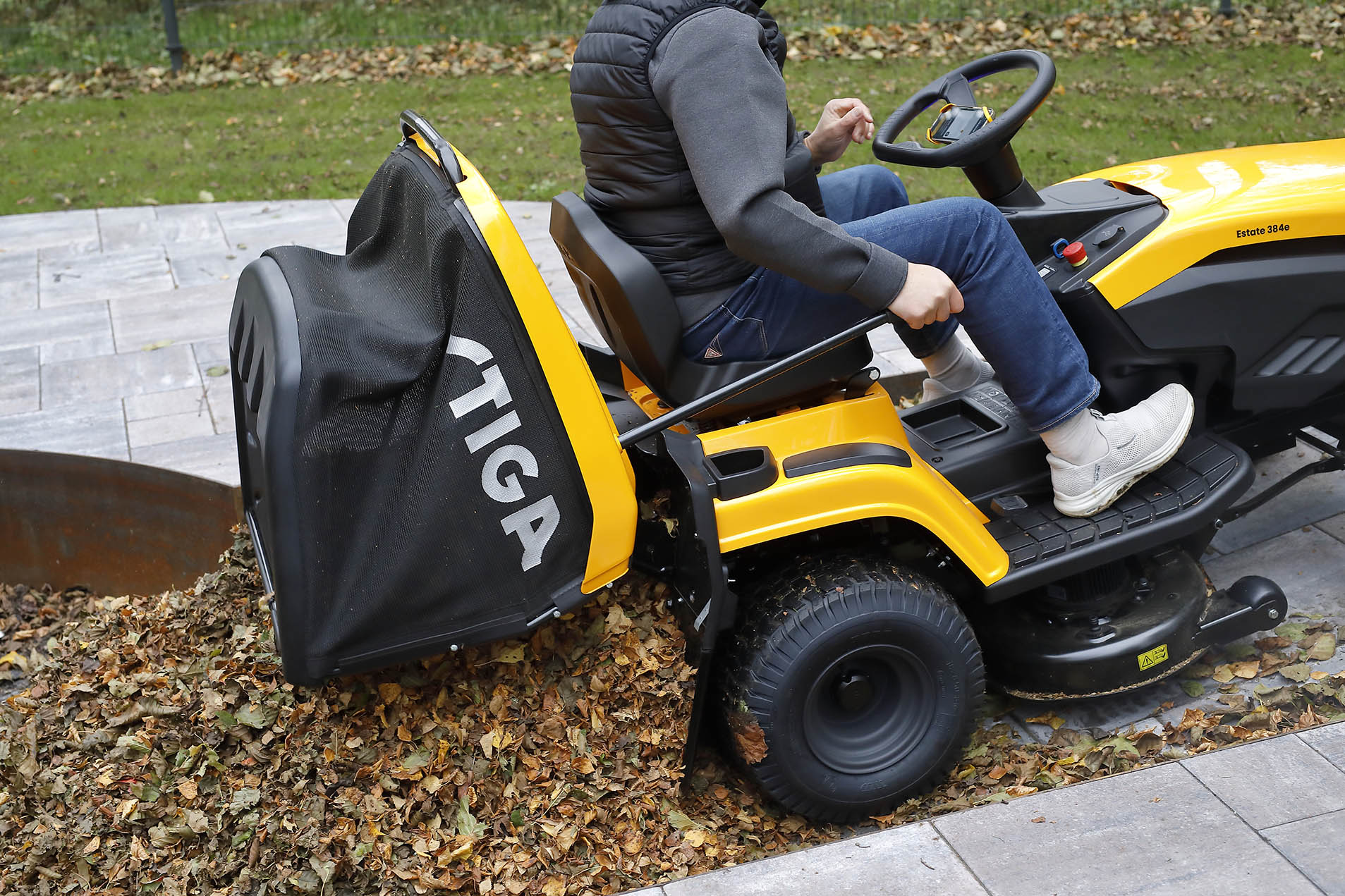
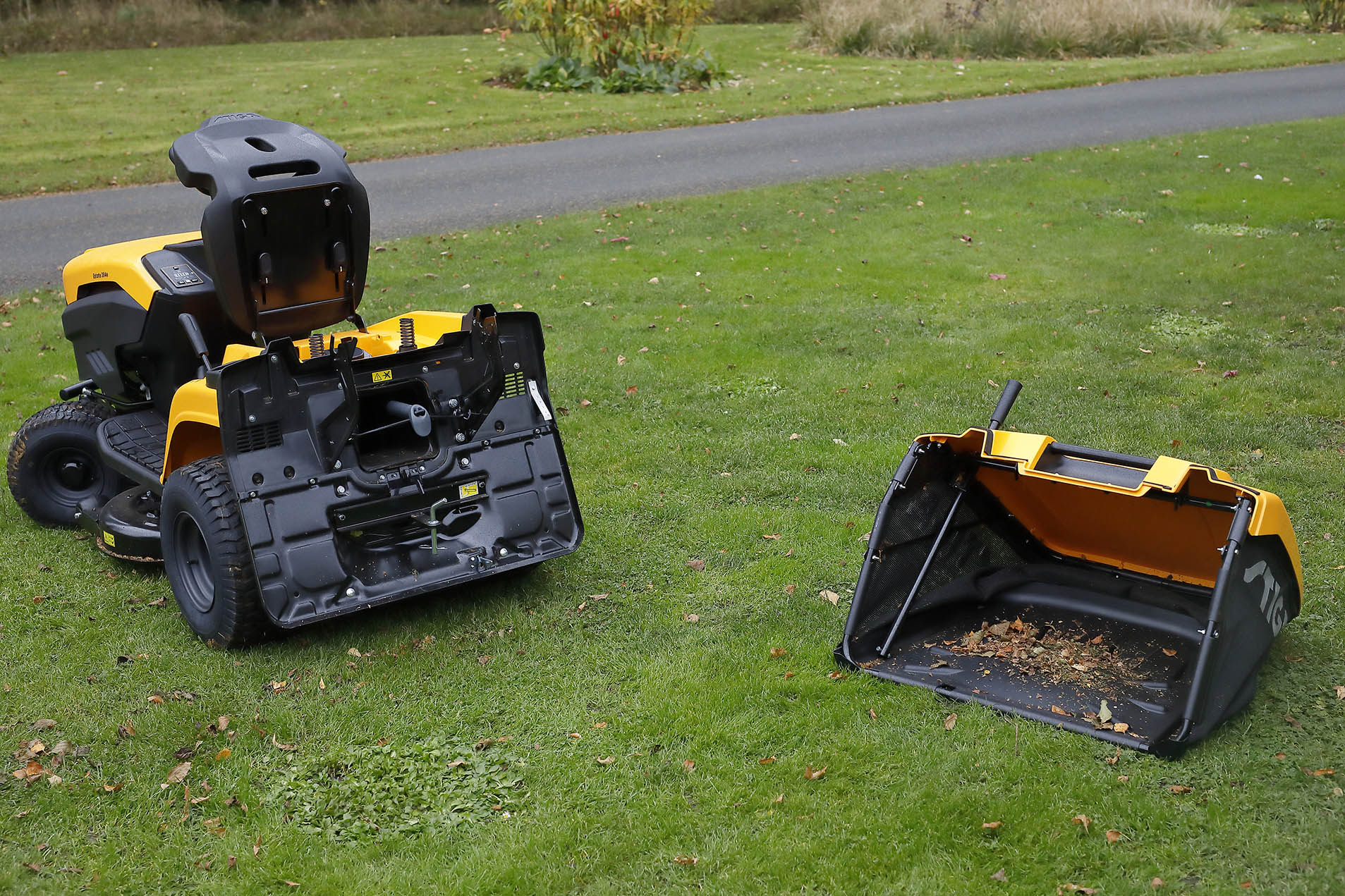
10:11 STIGA Estate 384e Battery-Powered Ride-On Mower, stiga.ee
11:23 Baltic Agro Compost Accelerator, koduaed.balticagro.ee
11:43 STIGA A 15v Wire-Free Robotic Lawn Mower, stiga.ee
12:05 Baltic Agro Winter Bird Food, koduaed.balticagro.ee
Transcript
The weather has become increasingly unpredictable in recent years, and autumn, as it turns out, lasts considerably longer than we might have expected. These days, we no longer need to worry that absolutely everything in the garden must be finished before the first overnight frosts arrive. We can take things quite calmly and simply work according to what the weather and climate allow.
Many perennials still stand beautifully upright in October, even in November, with their strong stems intact. I wouldn’t cut them down at all. I would leave them standing throughout winter and only cut them back in spring, because they give the planting area character. If we cut everything down, the whole area becomes empty and uninteresting. You look out of the window in winter and there’s nothing to see – everything is low and rather dull.
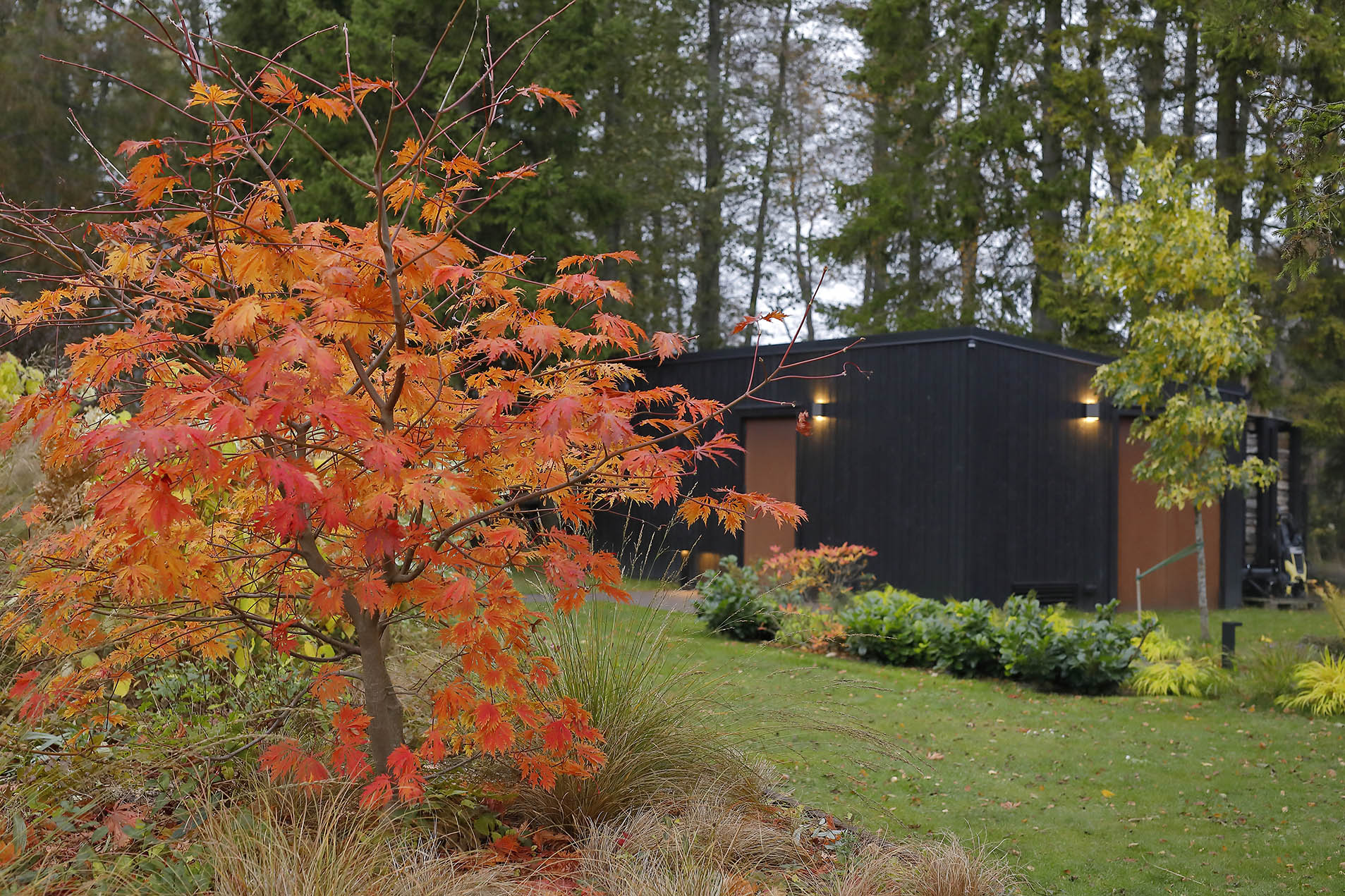
Ornamental grasses should definitely be left standing. I wouldn’t cut back a single ornamental grass in autumn, because they generally hold up very well until spring. Of course, some may collapse or break during severe storms. If that happens, they can be cut back and cleared away, but the rest should remain.
In fact, we can take our time with autumn gardening. We should look at which plants have already lost their shape. Hostas, for example, are often among the first to deteriorate. A light frost arrives and suddenly they are lying flat on the ground. Those are worth clearing away immediately, while anything that still looks attractive should be left alone.
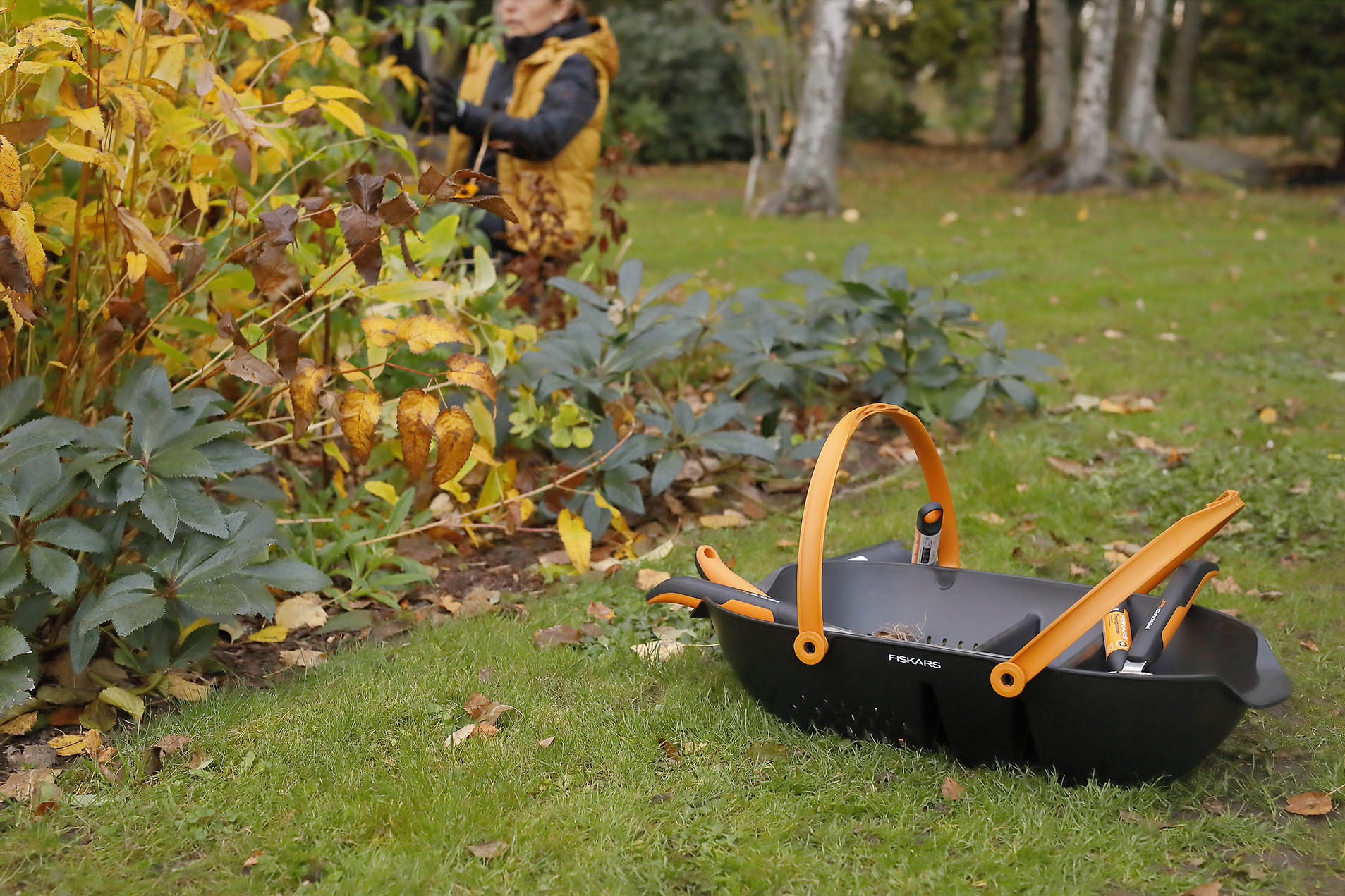
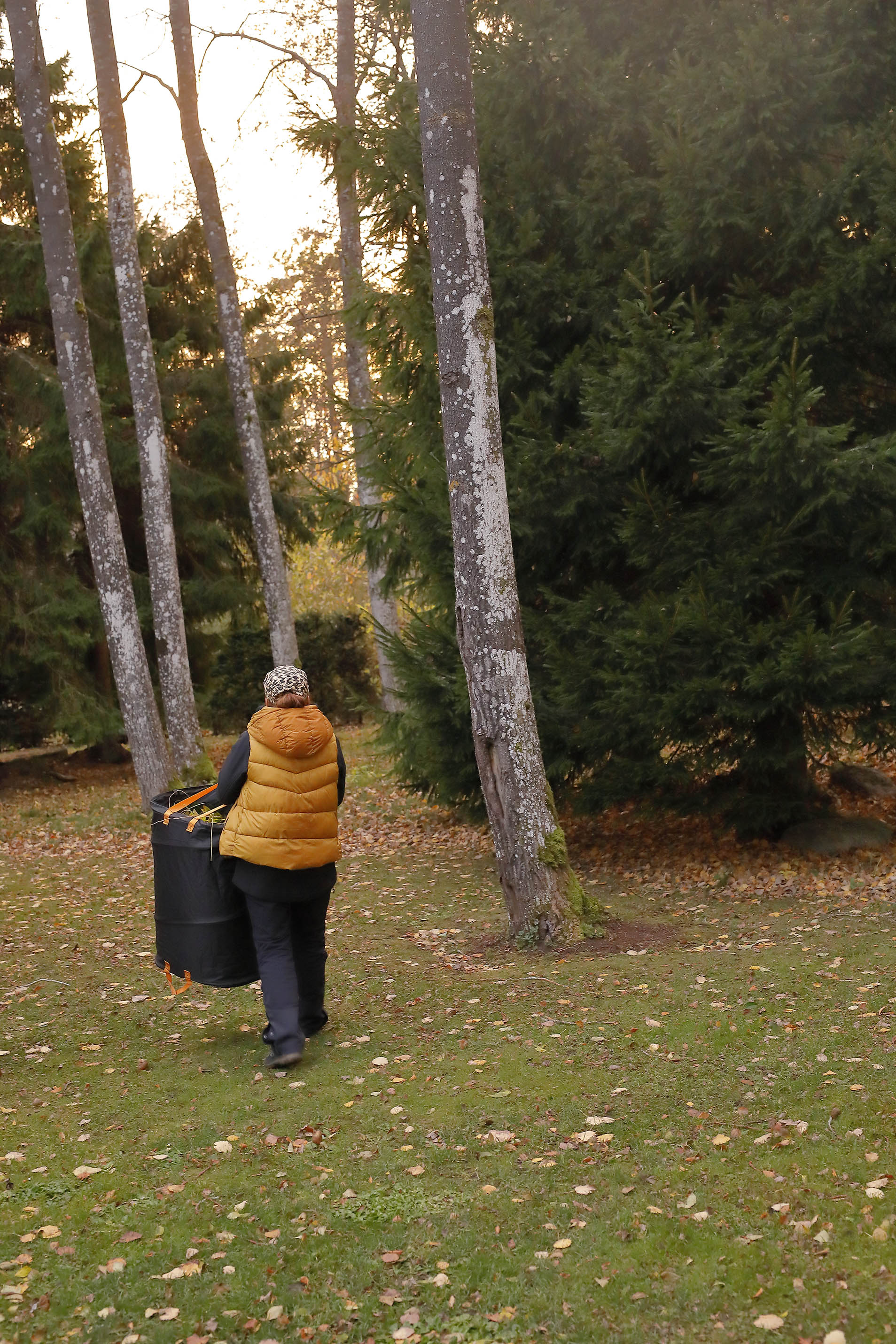
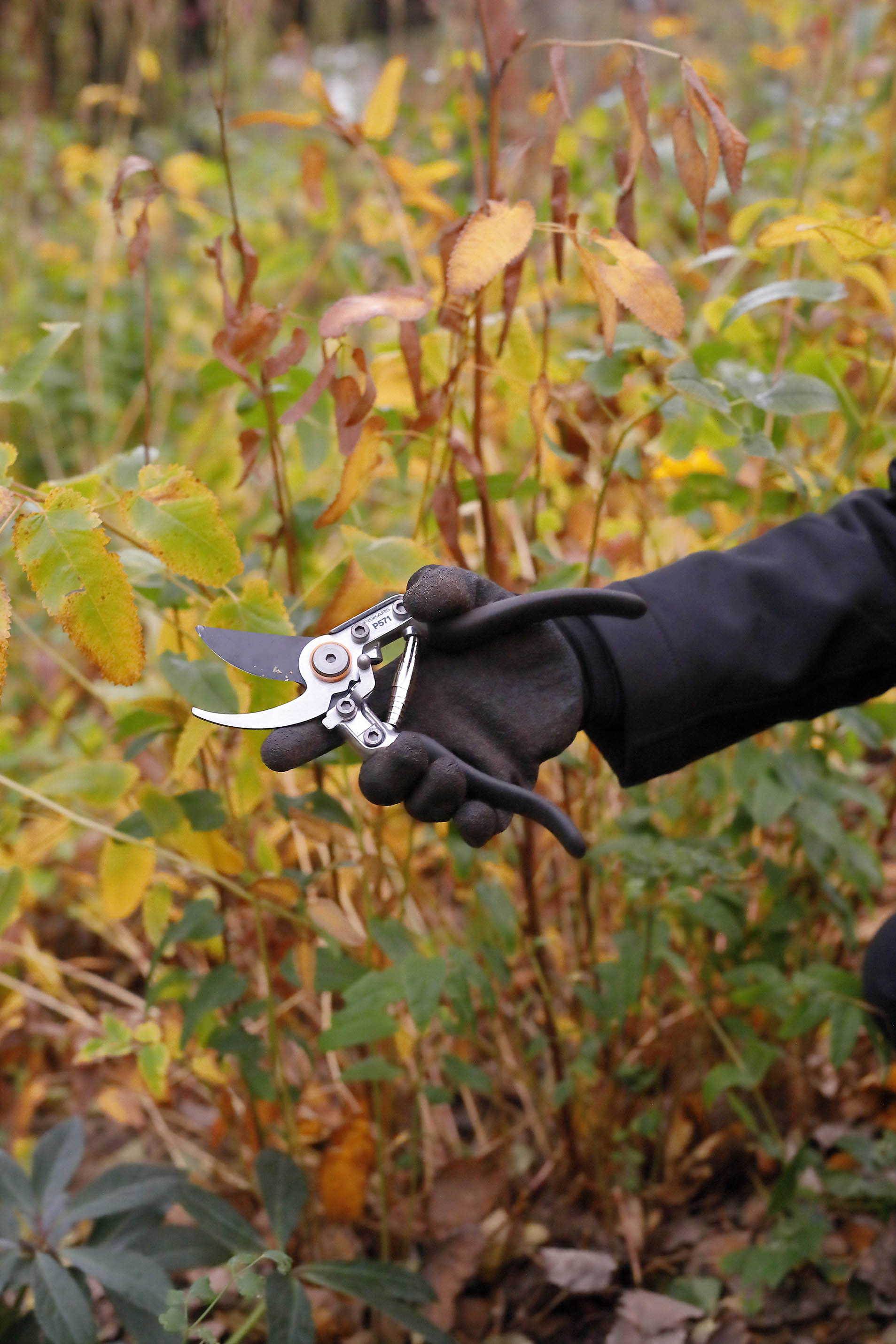
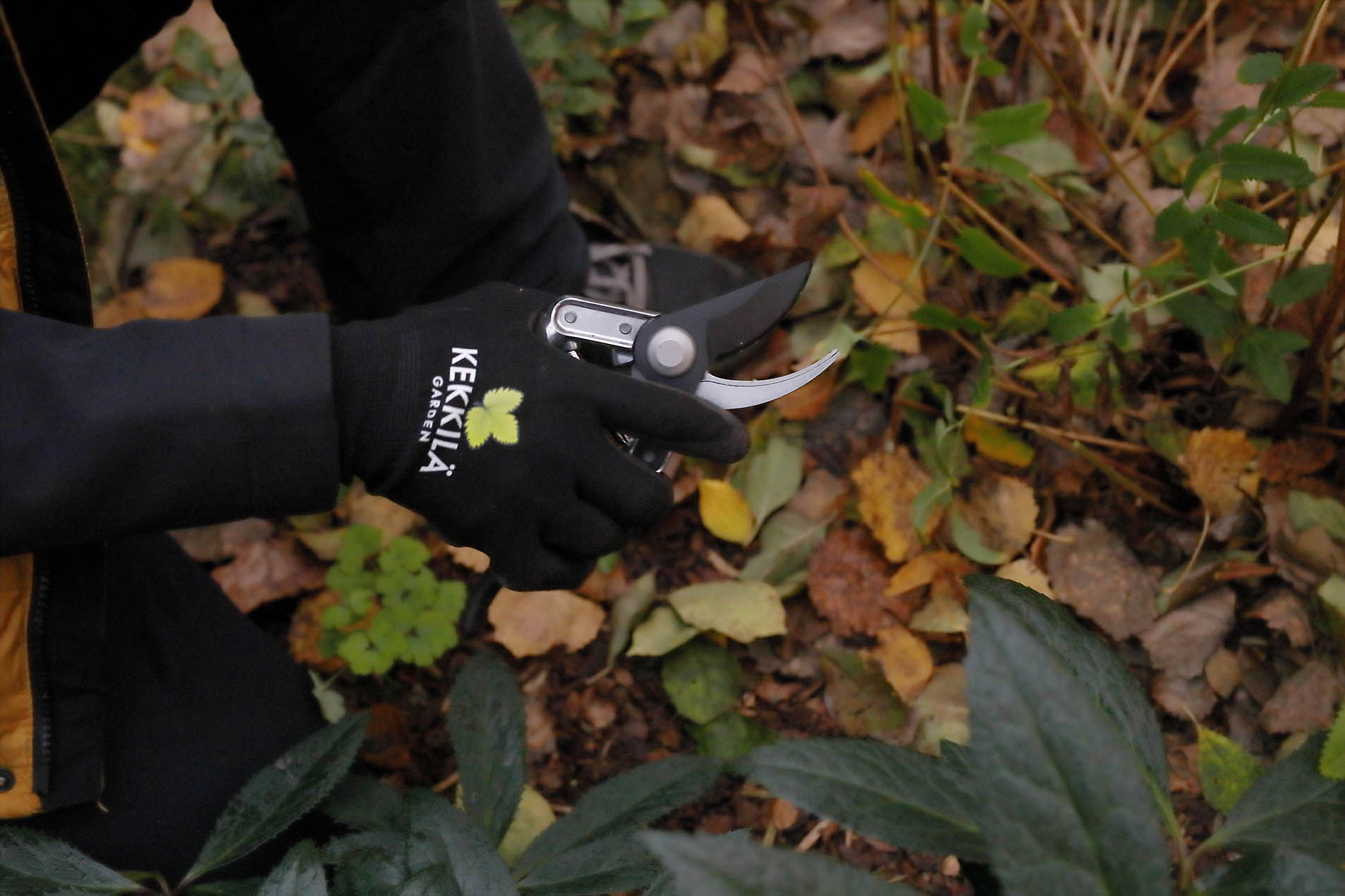
Some perennials simply won’t retain their structure and need to be removed. If there’s only a little cutting to do, secateurs are perfectly sufficient. (Fiskars secateurs and Fiskars P571 loppers.) If several neighbouring perennials have lost their shape, a sickle can be useful for cutting them back before collecting the material for composting. (Fiskars Ergo Pop-Up Garden Bag.)
Of course, if any of these plants suffered from disease during summer, such as powdery mildew or other problems, I wouldn’t put them in the compost. Diseased plant material should be removed.
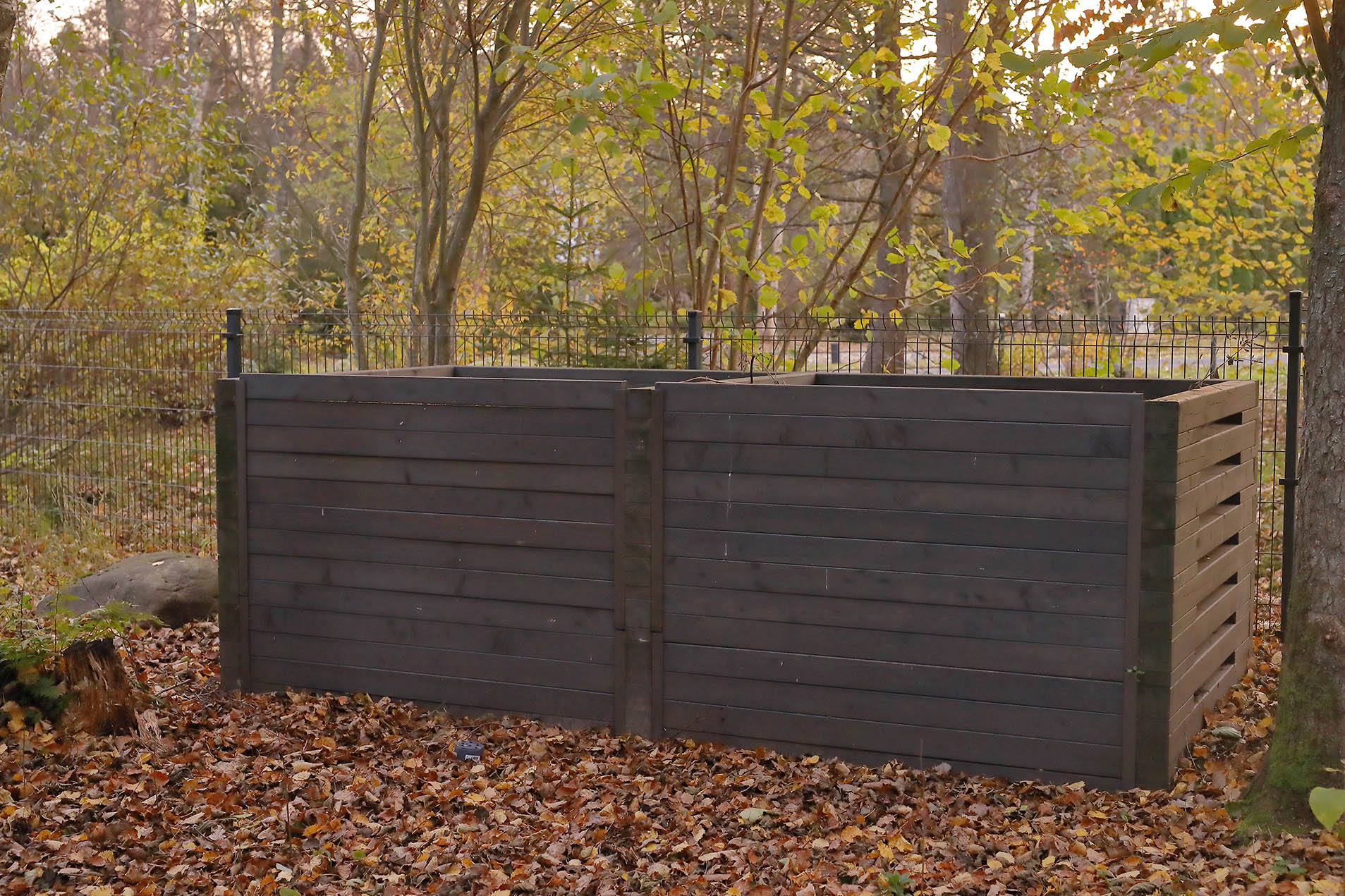
Everything else can be collected, chopped into smaller pieces and added to the compost heap. It will make excellent fertiliser for the following year or the year after.
It’s also important to allow shrubs to retain their beauty for as long as possible, perhaps even until Christmas. Roses, for example, often continue flowering until the first really severe frosts, sometimes right up to Christmas. Let them flower!
But there’s one very important lesson I’ve learned during my twenty or so years of growing roses, and I always emphasise it: we do not prune roses in autumn!
In the second half of August, roses should receive an autumn fertiliser, which encourages their shoots to mature and become woody. This helps them develop the strength they need to survive winter. They have the nutrients they require, and they don’t need pruning.
If you prune roses in autumn, they may try to start growing again. The new shoots will be soft and full of sap, and the plant will direct its energy into producing new shoots, buds and flowers when it should actually be preparing to rest.
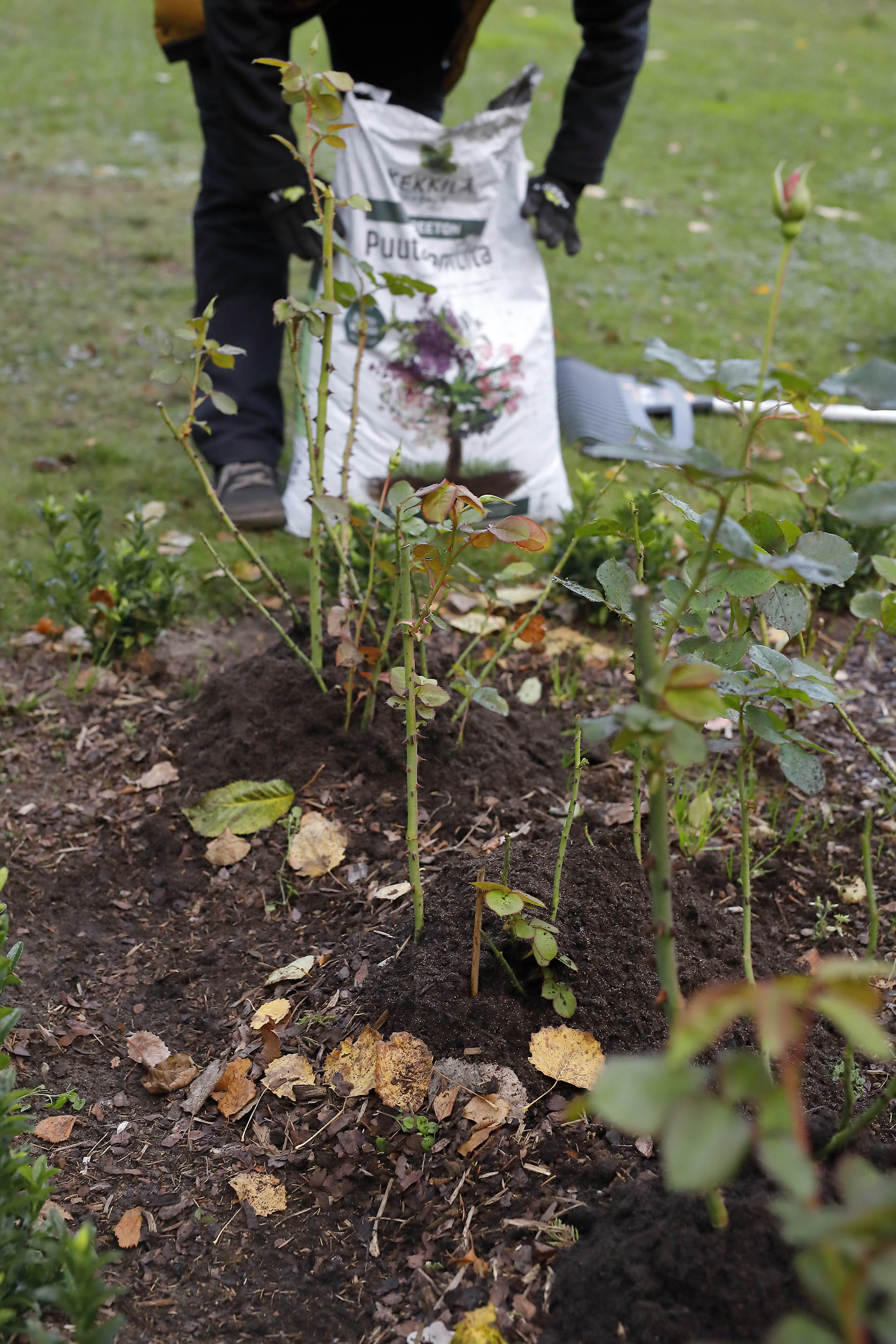
What we do need to consider is protecting roses for winter by mounding soil around their bases. This means placing a mound of soil approximately 20 centimetres high around the base of each rose to protect it from winter frost.
Everything above the mound may eventually turn black and unattractive and need cutting back, but the parts protected inside the mound can remain green and healthy.
And if a rose has been planted correctly, with the graft union about four finger-widths below the soil surface, a substantial part of the plant will survive and can be used to produce a beautiful new bush the following season.
The soil doesn’t have to be anything particularly special. There’s no need to use dedicated rose compost. Ordinary field soil, garden soil or general-purpose bagged soil will do. It’s always useful to keep a few bags of Kekkilä soil at home, particularly Kekkilä peat-free soil. Simply mound the soil around the rose, and it will be well protected throughout winter.
I wouldn’t do this too early. I’d wait until more severe frosts are approaching. Roses can certainly tolerate temperatures of around minus ten degrees Celsius without additional protection, but once a harsher winter is on its way, it’s time to mound the soil.
Then leave the roses as they are. Some fallen leaves can be removed, especially diseased leaves, which should definitely be cleared away so they don’t contribute to problems the following spring.
Otherwise, the remaining work can wait until spring. Leave the roses in peace and let them be.
There are also many plants that require no autumn maintenance whatsoever, such as hydrangeas.
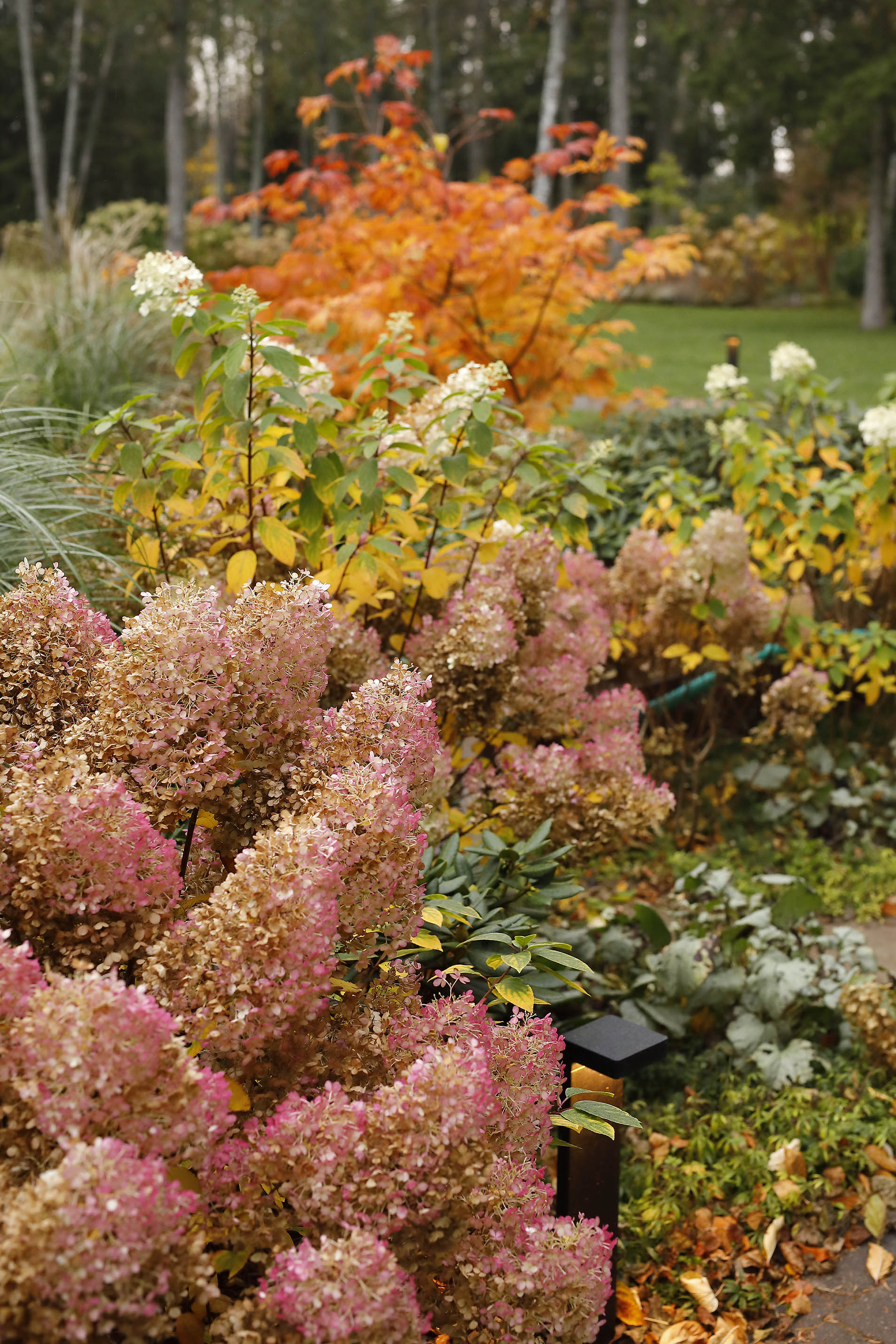
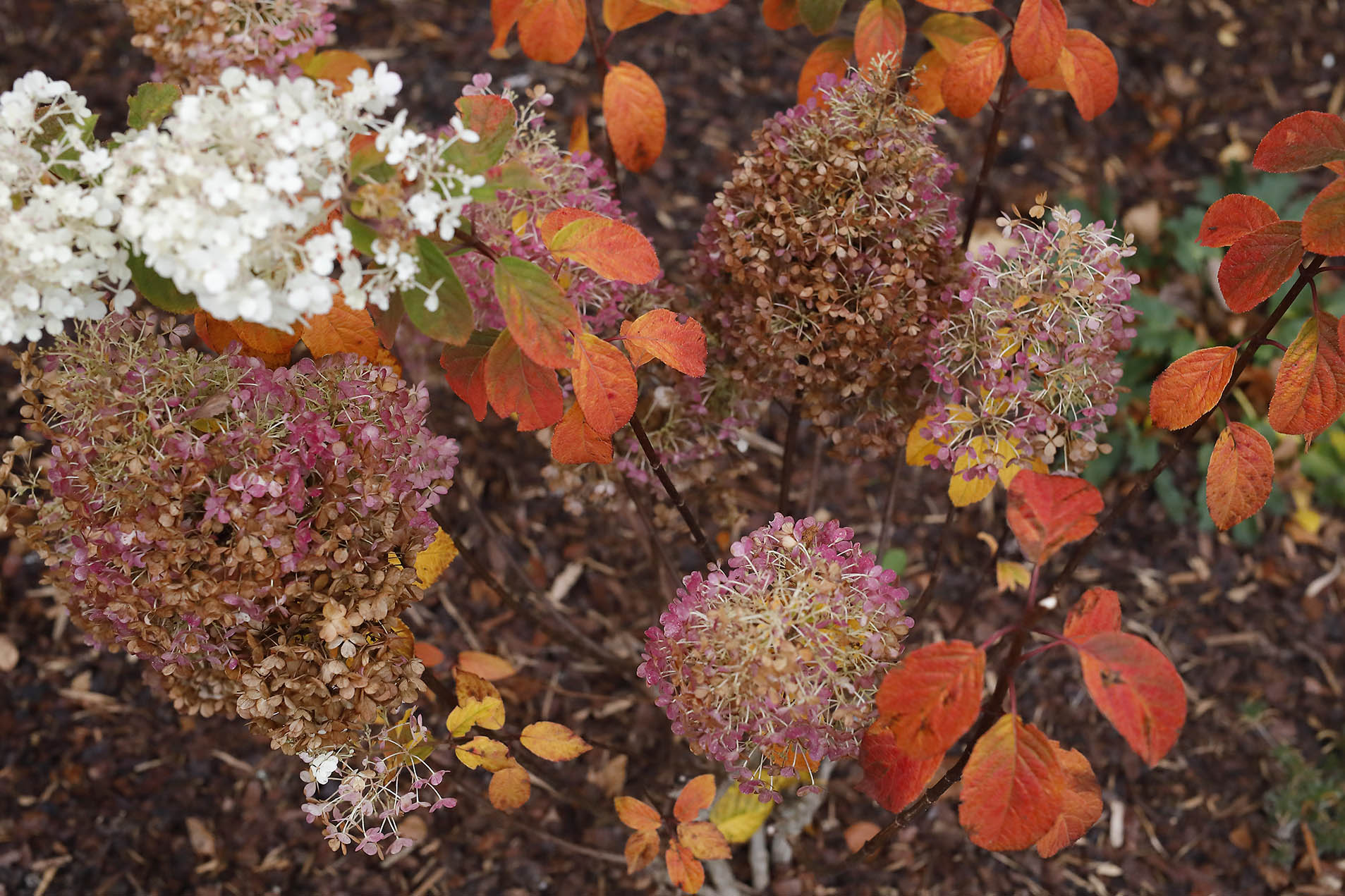
Hydrangeas can remain exactly as they are. Their flowerheads are beautiful, and as they dry, they may turn brown or beige. They remain in the planting beds throughout winter, and when snow arrives, their dried flowerheads may still rise above it. That’s fascinating to see.
Shrubs with berries also provide food for birds. And the less we cut back, the more shelter remains for insects looking for somewhere to overwinter.
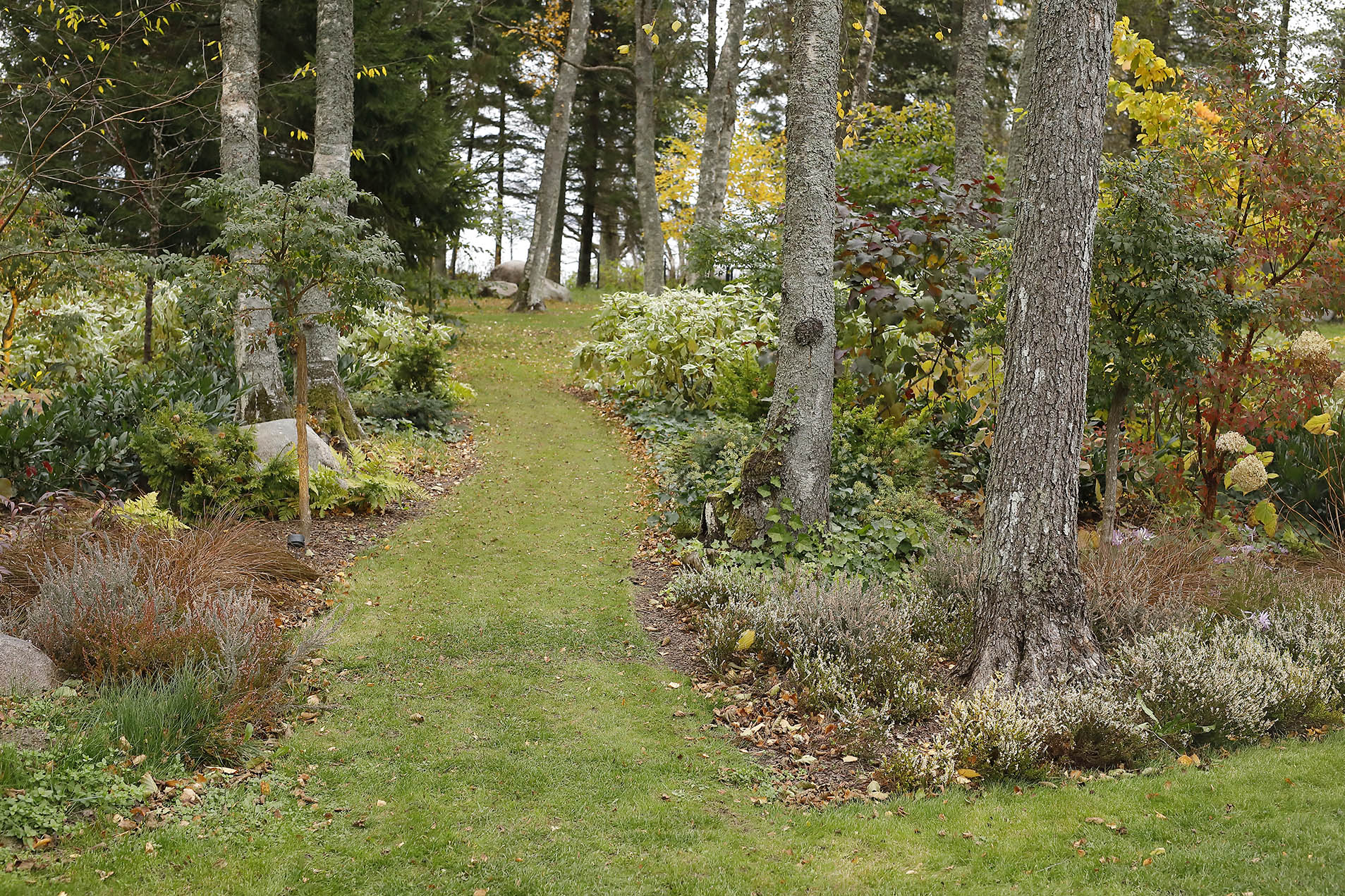
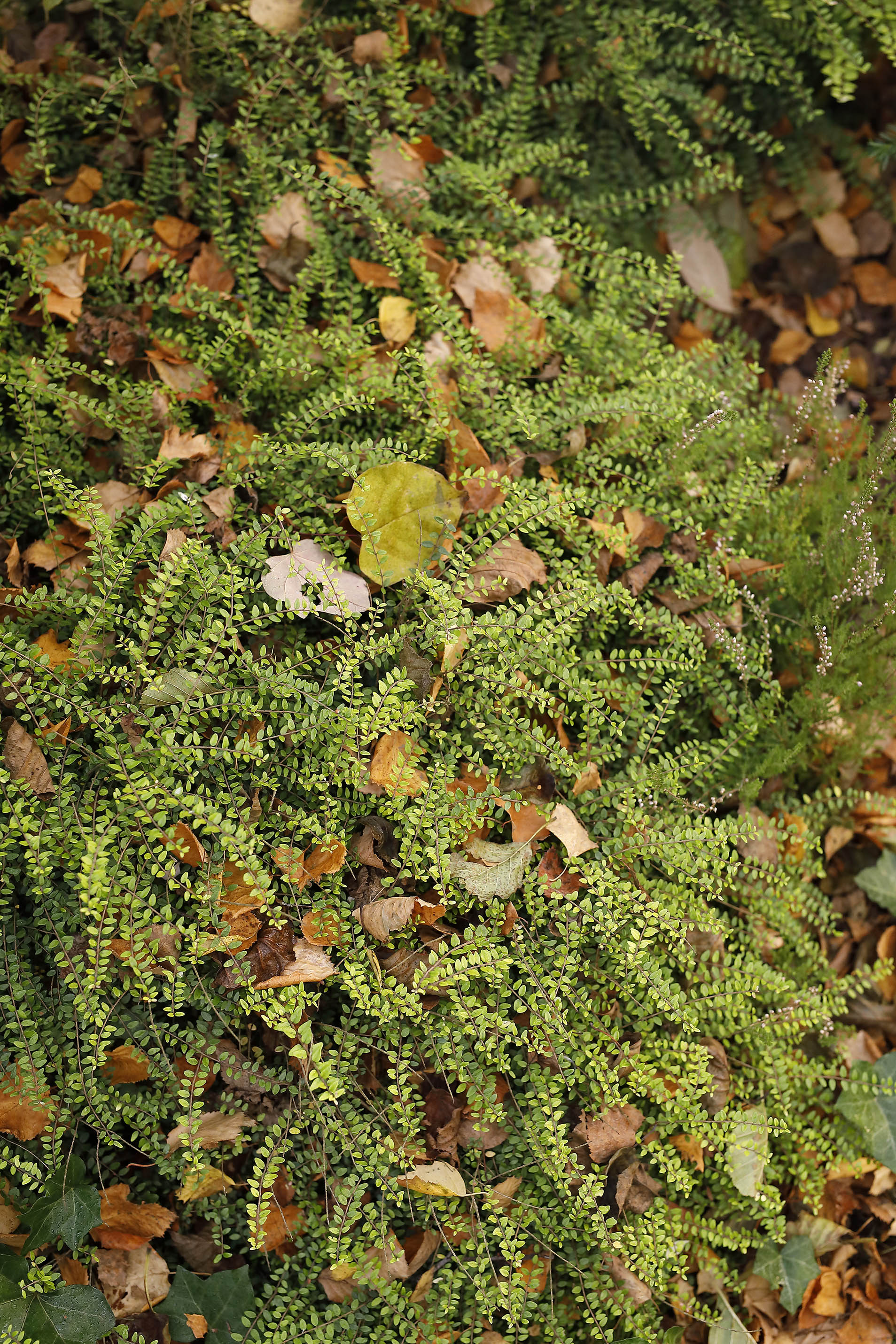
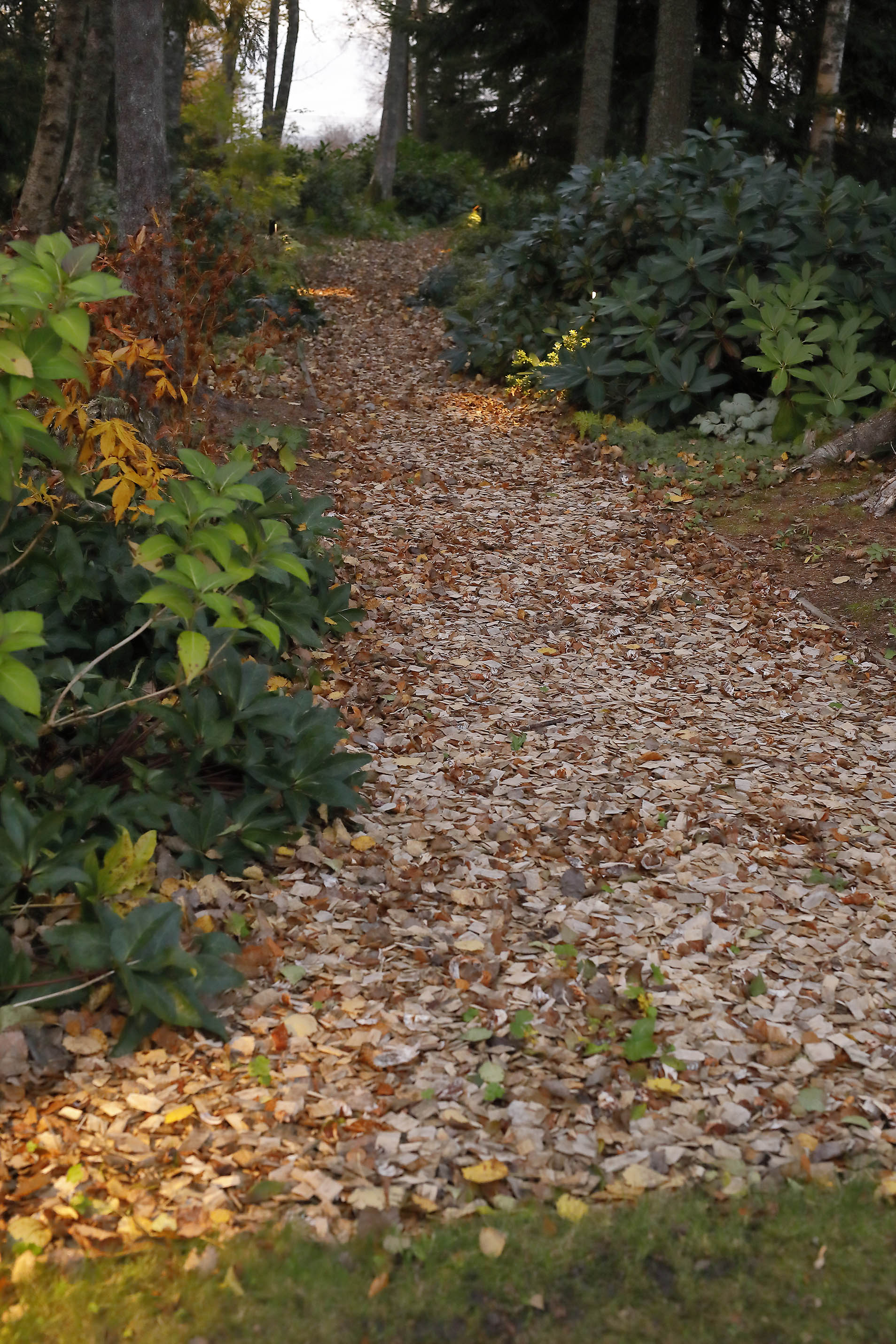
Similarly, we don’t need to remove every fallen leaf from planting beds. We can clear away the thickest layer and leave a thinner covering behind. Ideally, the leaves might be dry when they fall, but of course they’ll get wet eventually. That’s perfectly natural.
A layer of leaves protects the planting bed, the soil ecosystem and the insects living beneath it. This is how a planting area should function – as naturally as possible, much as it would in the wild.
The more perennial stems, plant structures and ornamental grasses we leave standing, the better protected the entire planting area becomes.
This is especially valuable when there are borderline-hardy plants or shrubs that might otherwise need extensive winter protection with horticultural fleece or plant covers. (Baltic Agro.)
If there are standing perennials around them and fallen leaves collecting at their bases, these plants already benefit from a degree of natural protection.
One of the first autumn gardening tasks, in my opinion, is applying autumn fertiliser. (Kekkilä Autumn Lawn Fertiliser and Kekkilä Autumn Fertiliser PLUS+.)
If we want autumn fertiliser to benefit the plants during the current growing season, it should be applied in the second half of August or during September, while the garden is still actively growing.
This helps plants begin preparing for autumn. If we apply autumn fertiliser too late, it essentially acts as a general fertiliser, with its benefits becoming available later.
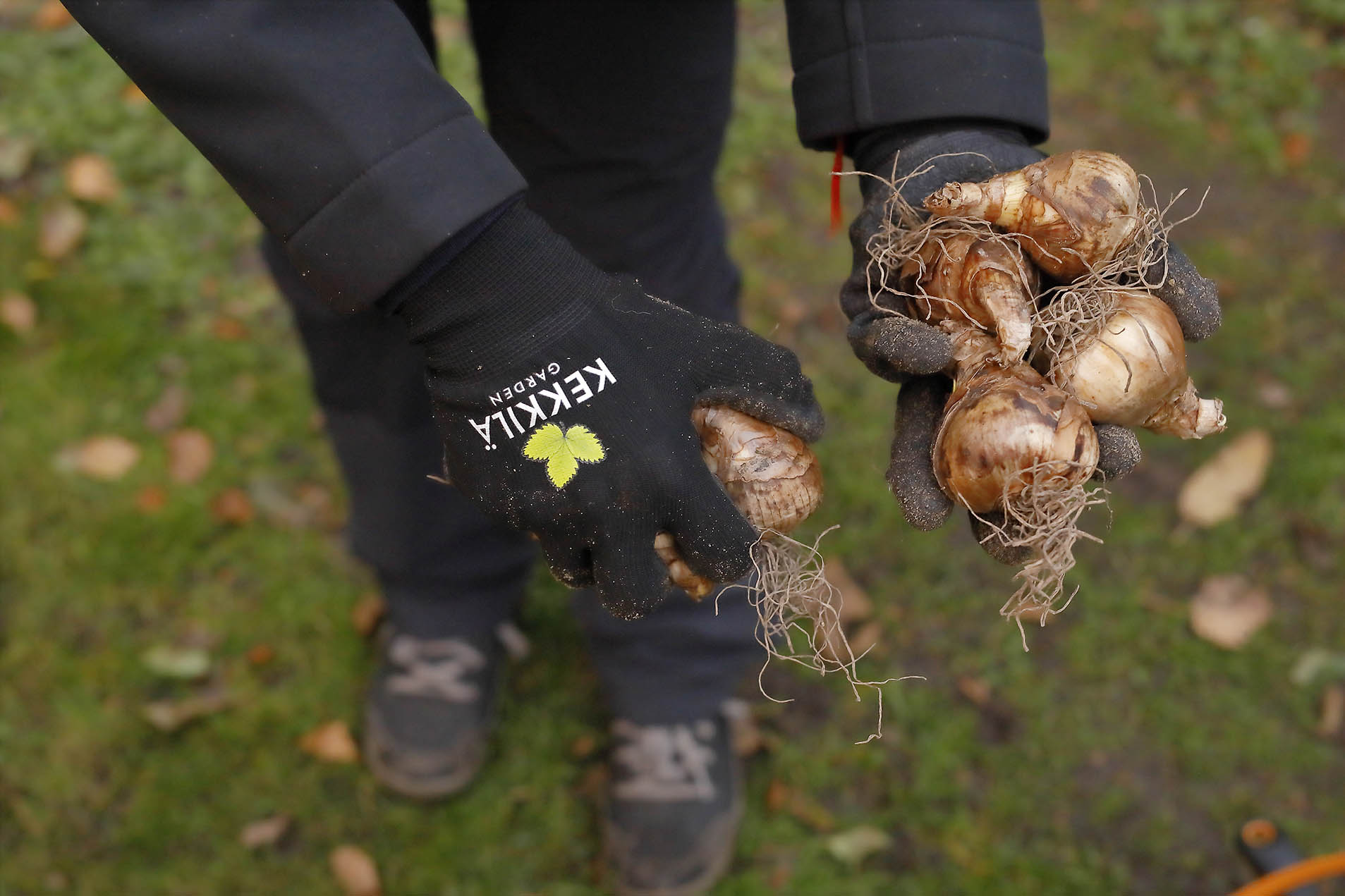
Autumn fertiliser is also very useful when planting flower bulbs. (Kekkilä Autumn Fertiliser PLUS+.)
Here, however, we need to think carefully about which bulbs to plant first and which to leave until later.
With increasingly warm autumns, even if the usual advice is to plant daffodils while the weather is still mild, a prolonged warm spell afterwards may encourage them to start growing prematurely. We therefore need to find the right balance.
With tulip bulbs, I would wait considerably longer. Tulips have been experiencing more disease problems in recent years, and planting them too early can increase the risk of disease, resulting in unattractive leaves and poorly developed flowers.
I would rather leave tulip planting until very late autumn, even November. As long as the ground can still be worked, it’s generally better to plant tulips later.
Other flower bulbs can be planted somewhere between these two periods.
All kinds of flower bulbs can be planted with a small amount of autumn fertiliser. (Kekkilä Autumn Fertiliser PLUS+.)
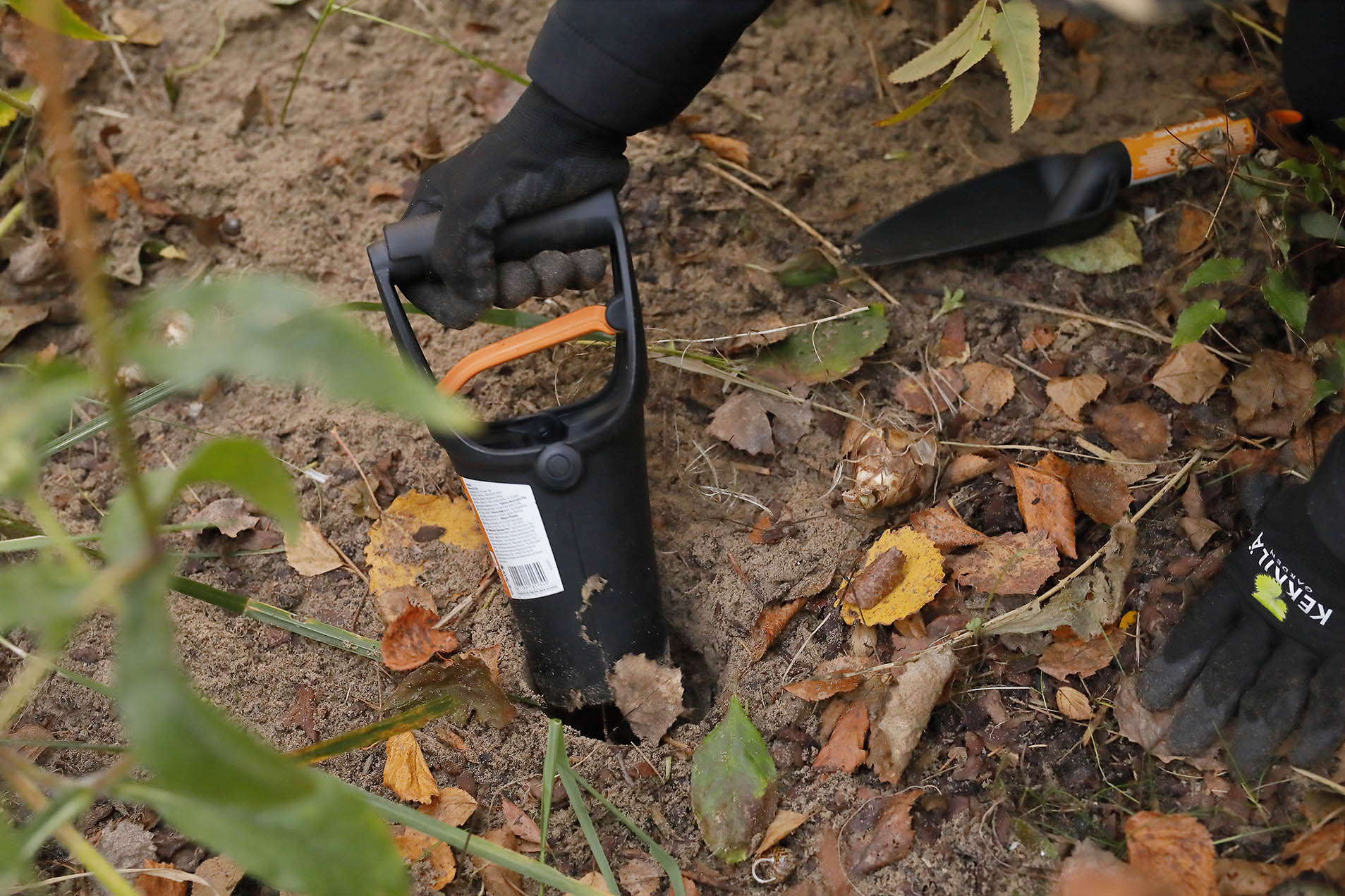
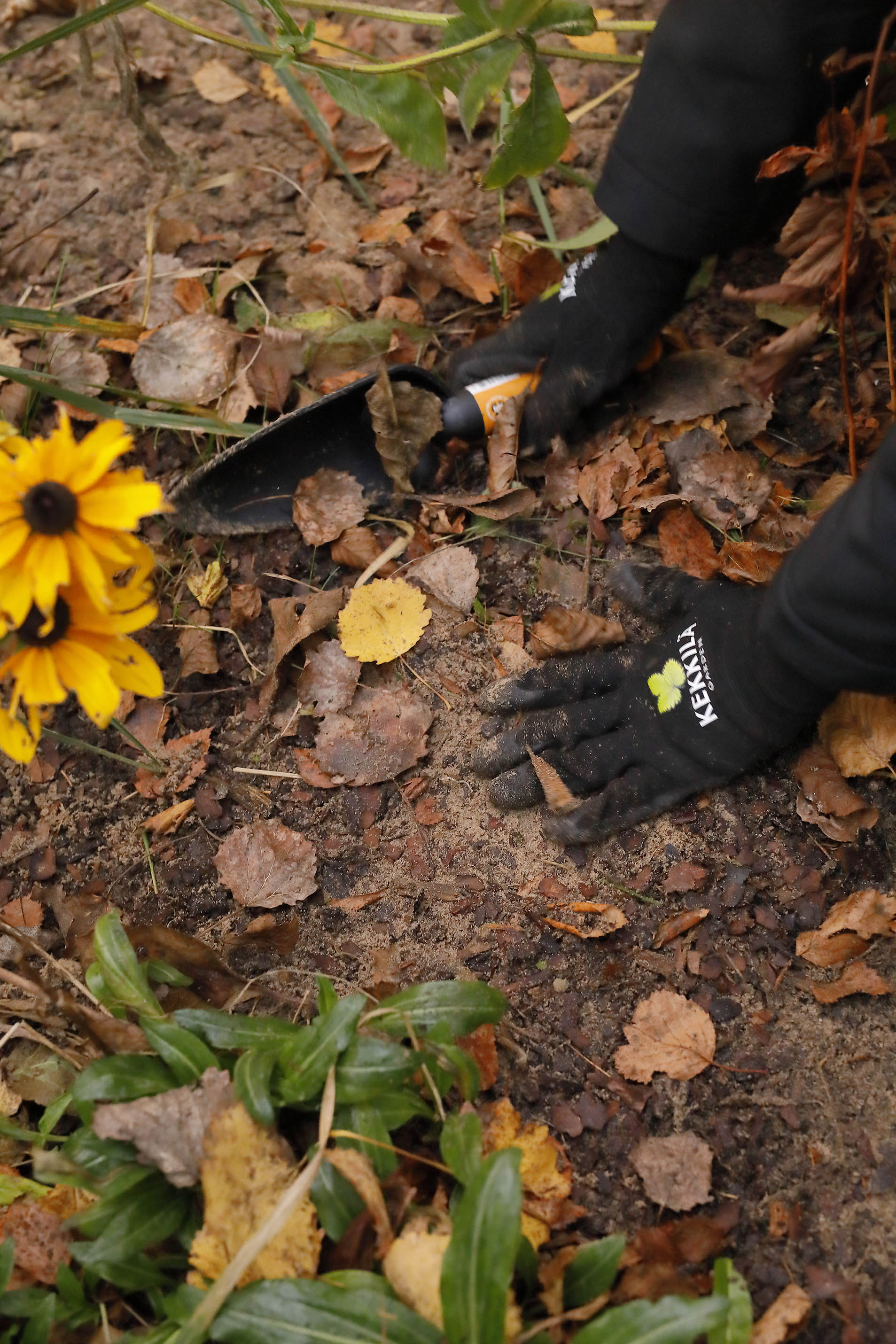
Our usual method is simple: prepare the planting hole, place the bulb inside, sprinkle a little autumn fertiliser over it and cover everything with soil. This gives the bulb the nutrients it needs to begin growing in spring.
(Fiskars Solid Bulb Planter, Fiskars Solid Planter or Fiskars Solid Garden Trowel.)
Of course, not everyone has enough time to spread different gardening tasks over two months.
Some people prefer to go into the garden and get everything done at once. And that’s perfectly fine too.
You can cut plants back, collect leaves and plant bulbs in one go. There may be a small risk that some bulbs start growing too early and produce leaves before winter, but if you can’t schedule everything separately, there’s nothing wrong with setting aside two or three days during autumn to complete several tasks together.
I wouldn’t turn autumn leaf collection into a huge, dramatic undertaking.
Some people feel they have to go out every second or third day to rake leaves again. I would take a much more relaxed approach.
(Fiskars X-Series Lawn and Leaf Rake.)
I’d let the first major fall of leaves accumulate, collect them, and then deal with the second or third wave later.
Having leaves lying on the lawn temporarily isn’t a problem.
Ideally, the lawn should eventually be left with very few leaves, or none at all, but leaves can remain in the planting beds.
Clearing those beds and cutting back the remaining plants can be a spring task, making room for new growth.
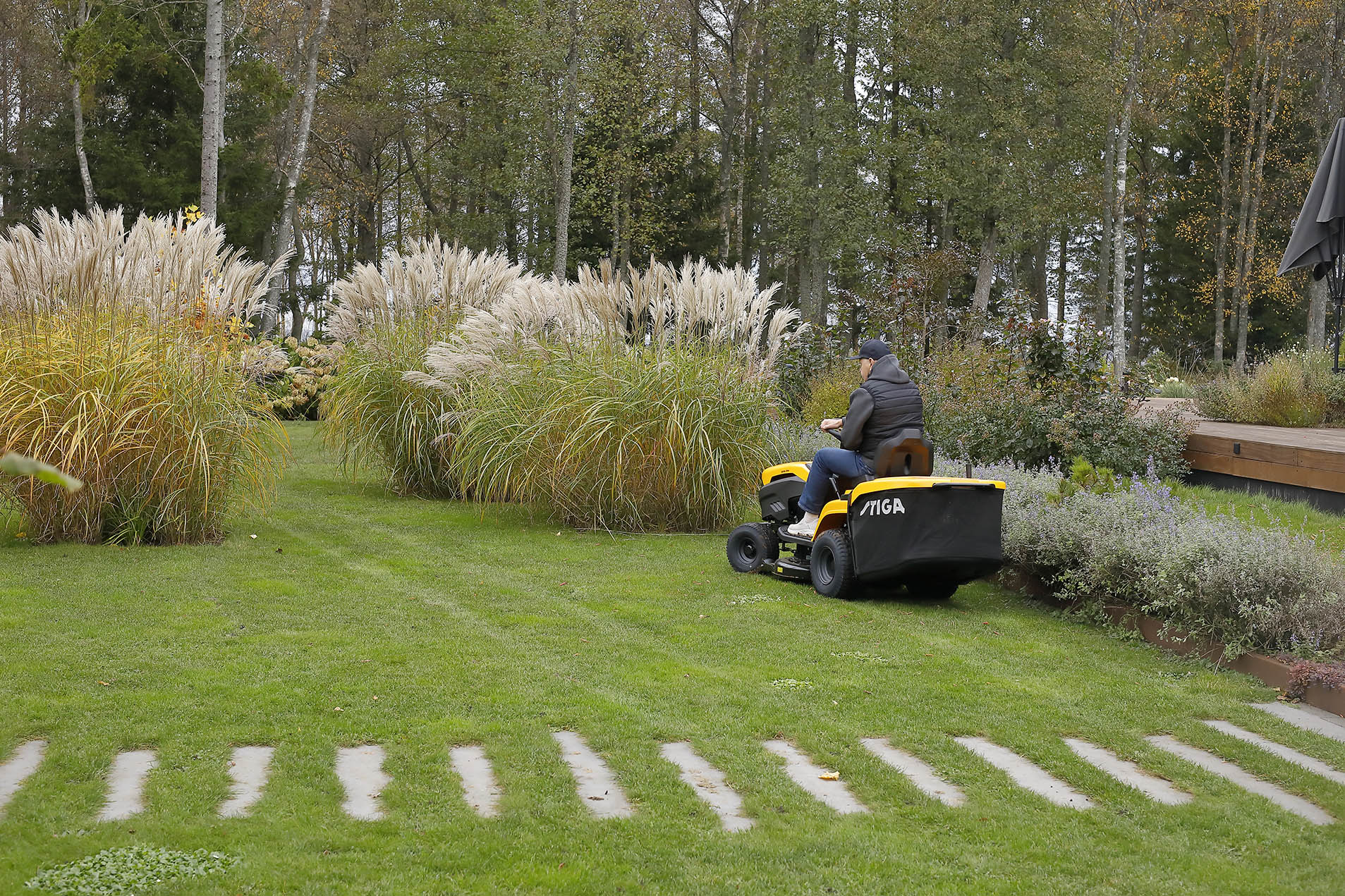
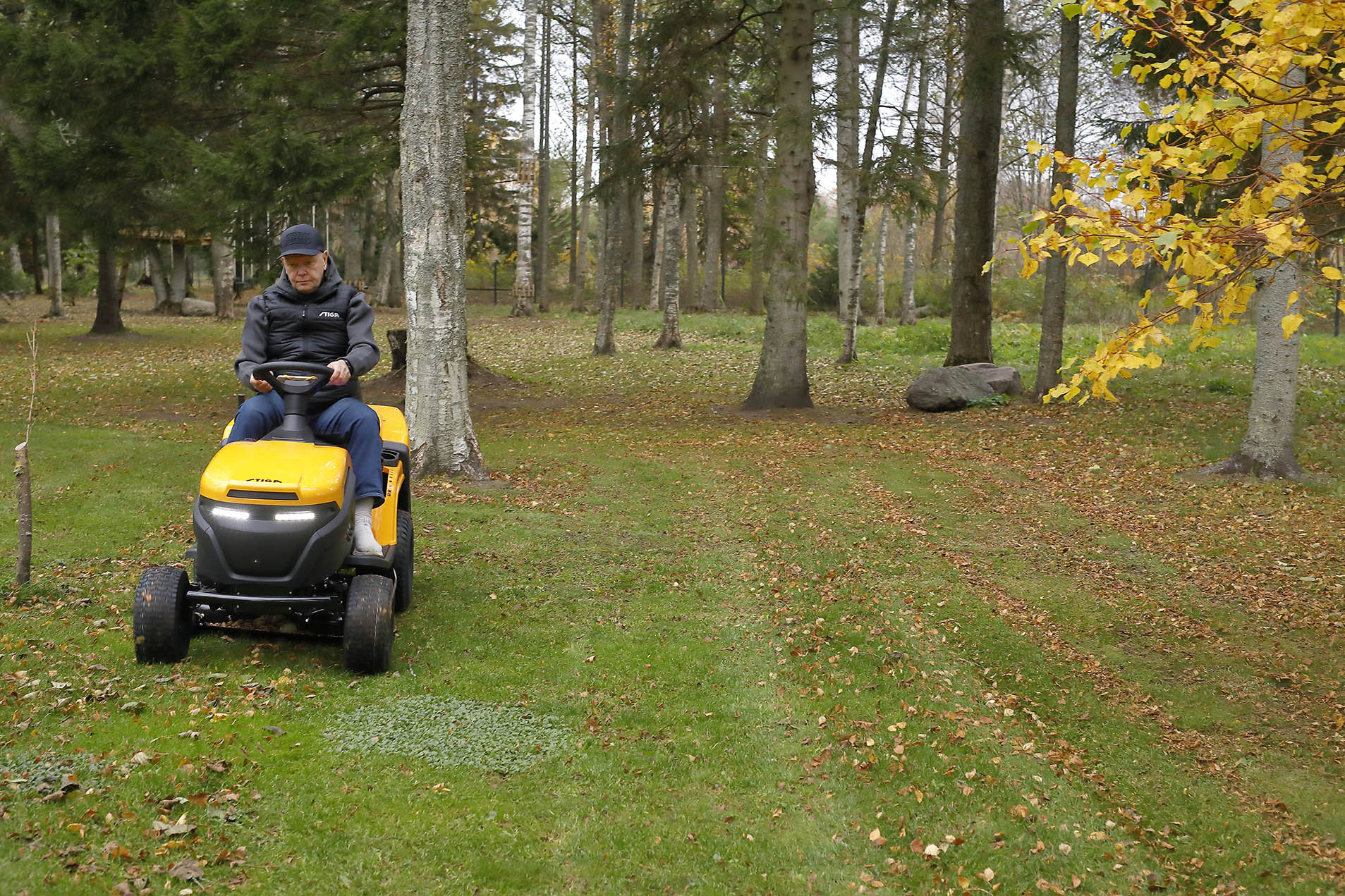
Leaves collected from the lawn with a mower can also be useful. Many lawn mowers are capable of shredding leaves, allowing the resulting material to be added directly to compost. The STIGA Estate 384 battery-powered ride-on mower is one example.
Again, this provides excellent composting material.
Of course, it’s worth considering whether the leaves going into the compost are completely soaked or relatively dry.
Depending on their condition, we can adjust the moisture level of the compost using suitable products – either adding moisture or helping to reduce excessive wetness.
There are also products available today that accelerate the composting process, such as Baltic Agro compost accelerators and compost starters.
And when it comes to mowing the lawn, the principle is exactly the same: we should observe what autumn is doing.
If everything is still growing, the weather is warm and the grass continues to grow, we can simply keep mowing later into the season.
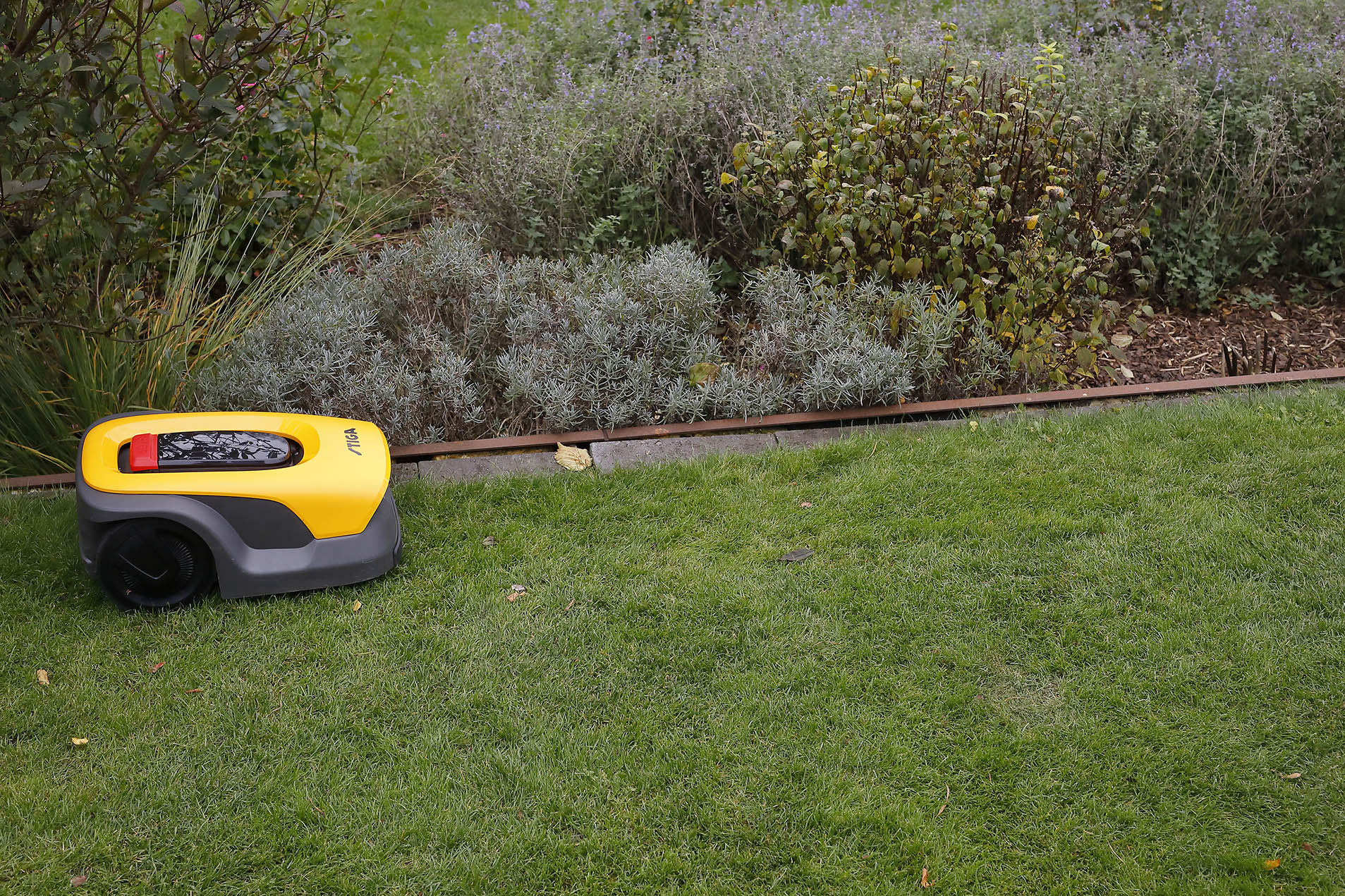
It’s especially convenient when a robotic lawn mower does the work for us, such as the STIGA A 15v wire-free robotic mower.
And when it’s clear that winter is approaching and freezing temperatures are setting in, we naturally stop mowing.
The important thing is to live in harmony with nature’s rhythms!
And let’s not forget to feed the birds in winter, for example with Baltic Agro bird food and seeds.

Galerii